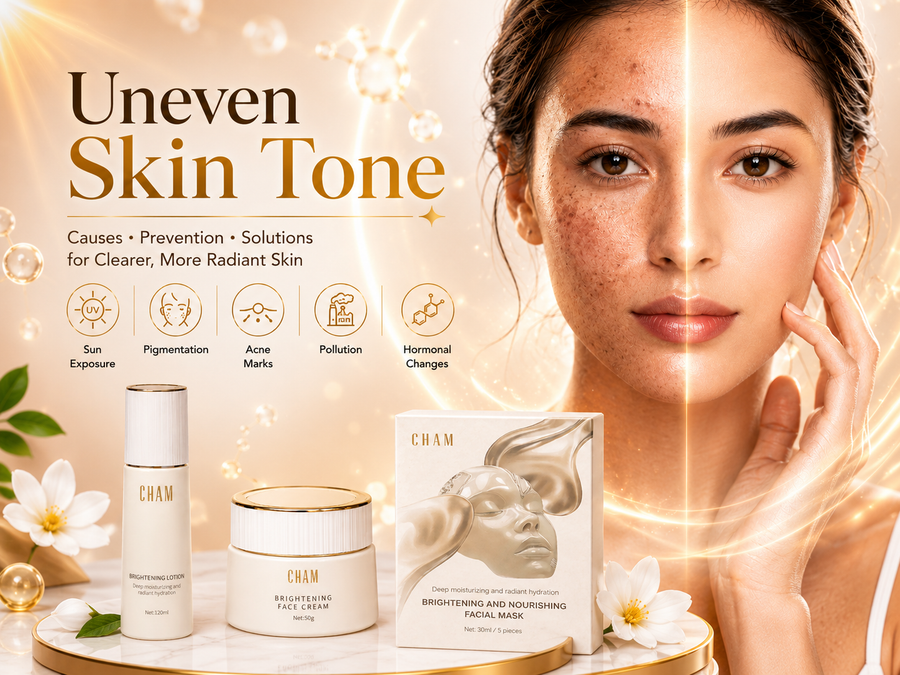
One of the most common skincare concerns among Indian women is hyperpigmentation.
Whether it's acne marks, sun spots, tanning, or patches of uneven skin tone, hyperpigmentation can make skin look dull and uneven. The good news is that while pigmentation can take time to improve, a consistent skincare routine and the right ingredients can make a noticeable difference.
Many people spend thousands on treatments without first understanding why pigmentation occurs. In reality, successful hyperpigmentation treatment starts with identifying the cause and following a long-term strategy.
Let's explore what hyperpigmentation is, what causes it, and how you can reduce it naturally.
What Is Hyperpigmentation?
Hyperpigmentation occurs when certain areas of the skin produce more melanin than usual.
Melanin is the natural pigment responsible for your skin color. When melanin production becomes uneven, darker patches or spots can appear.
Hyperpigmentation can affect:
-
Face
-
Neck
-
Hands
-
Arms
-
Chest
-
Back
It can occur in all skin tones but is especially common in melanin-rich skin.
Common Causes of Hyperpigmentation
Understanding the cause is the first step toward effective treatment.
1. Sun Exposure
One of the biggest causes of pigmentation is ultraviolet (UV) exposure.
When your skin is exposed to sunlight, it produces more melanin as a defense mechanism.
Over time, this can result in:
-
Sun spots
-
Uneven skin tone
-
Persistent tanning
-
Dark patches
This is why sunscreen is considered essential for any pigmentation routine.
2. Acne Marks
Post-inflammatory hyperpigmentation (PIH) often develops after acne heals.
When the skin experiences inflammation, it can leave behind dark marks that may remain visible for weeks or months.
These marks are particularly common in Indian skin tones.
3. Hormonal Changes
Hormonal fluctuations can trigger pigmentation, especially in women.
This may occur due to:
-
Pregnancy
-
Birth control
-
Hormonal imbalances
-
Certain medications
Hormonal pigmentation often appears on:
-
Forehead
-
Upper lip
-
Cheeks
4. Skin Irritation
Using harsh products, over-exfoliating, or aggressively scrubbing the skin can trigger inflammation and worsen pigmentation.
Healthy skin heals better and is less likely to develop persistent dark spots.
5. Pollution and Environmental Stress
Environmental stressors can contribute to dullness and uneven skin tone.
Daily exposure to pollution may accelerate skin damage and make pigmentation concerns more noticeable.
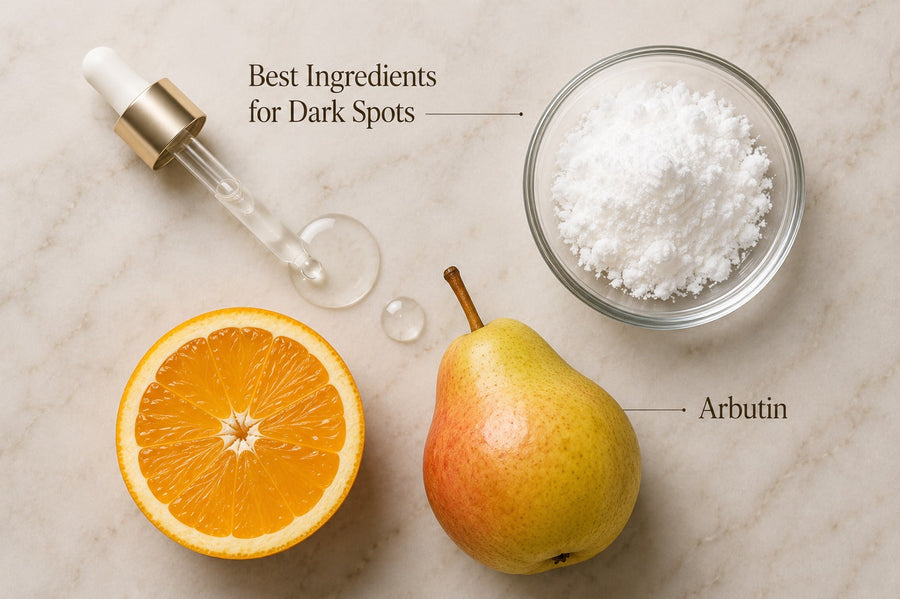
Best Ingredients for Hyperpigmentation
Not all skincare ingredients work the same way.
The following ingredients are among the most popular for improving the appearance of uneven skin tone.
Niacinamide
Niacinamide is one of the most versatile skincare ingredients available today.
Benefits include:
-
Supports an even-looking complexion
-
Helps improve skin barrier function
-
Reduces the appearance of post-acne marks
-
Improves overall skin radiance
It is suitable for most skin types and works well in daily routines.
Alpha Arbutin
Alpha Arbutin is often included in brightening skincare products because it helps support a more balanced skin tone.
Benefits:
-
Targets visible discoloration
-
Helps improve the appearance of dark spots
-
Suitable for long-term use
Vitamin C
Vitamin C is a powerful antioxidant known for its brightening properties.
Benefits include:
-
Improves skin radiance
-
Supports even skin tone
-
Protects against environmental stress
Vitamin C is particularly effective when combined with daily sunscreen.
Ceramides
While ceramides are not direct brightening ingredients, they support skin barrier health.
A healthy barrier helps the skin recover more effectively and maintain a balanced appearance.
Daily Habits That Help Reduce Hyperpigmentation
Skincare products are important, but daily habits play an equally important role.
Wear Sunscreen Every Day
This is non-negotiable.
Without sunscreen, many pigmentation treatments become less effective because UV exposure continues to trigger melanin production.
Choose:
-
SPF 50
-
Broad-spectrum protection
-
Daily application
Even on cloudy days.
Cleanse Gently
Avoid harsh cleansers and aggressive scrubs.
Gentle cleansing helps maintain skin barrier health and reduces unnecessary irritation.
Avoid Picking Pimples
Picking acne lesions can increase inflammation and significantly increase the risk of dark marks.
Allow blemishes to heal naturally whenever possible.
Stay Consistent
Pigmentation rarely improves overnight.
Consistency is more important than using expensive products.
Prioritize Sleep
Quality sleep supports skin repair and recovery.
Aim for 7–8 hours each night.
Stay Hydrated
Hydrated skin often appears healthier, smoother, and more radiant.
Drink enough water throughout the day and use hydrating skincare products.
A Simple Hyperpigmentation Skincare Routine
Morning
Step 1
Gentle Face Wash
Step 2
Brightening Serum with Niacinamide or Vitamin C
Step 3
Moisturizer
Step 4
SPF 50 Sunscreen
Night
Step 1
Gentle Cleanser
Step 2
Brightening Serum
Step 3
Nourishing Face Cream
Hyperpigmentation Treatment Mistakes to Avoid
Skipping Sunscreen
This is the biggest mistake people make.
Using Too Many Active Ingredients
Layering multiple strong ingredients can irritate the skin and worsen pigmentation.
Expecting Immediate Results
Most pigmentation concerns require patience and consistency.
Over-Exfoliating
Too much exfoliation can damage the skin barrier and increase sensitivity.
How Long Does It Take to Fade Pigmentation?
The answer depends on several factors:
-
Cause of pigmentation
-
Skin type
-
Severity
-
Consistency of treatment
Some mild post-acne marks may begin improving within a few weeks, while deeper pigmentation can take several months.
The key is consistency and protection from further UV exposure.
Cham Skincare Routine for Pigmentation
A simple brightening routine may include:
Cham Brightening Face Wash
Gentle cleansing without over-drying.
Cham Brightening Face & Body Serum
Supports a brighter, more even-looking complexion.
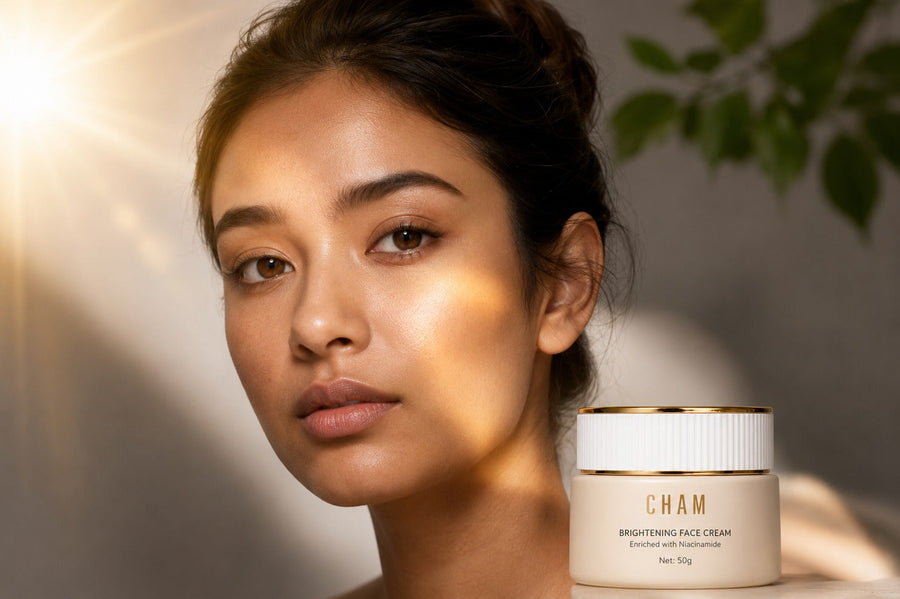
Cham Brightening Face Cream
Helps maintain hydration and barrier support.
Cham Sheet Mask
Provides an additional hydration boost 1–2 times weekly.
Image Suggestions for This Blog
-
Before and after pigmentation illustration
-
UV rays causing pigmentation graphic
-
Niacinamide + Alpha Arbutin ingredient infographic
-
Indian woman with healthy glowing skin
-
Cham Brightening product routine visual
Frequently Asked Questions
What causes hyperpigmentation?
Common causes include sun exposure, acne marks, hormonal changes, skin irritation, and environmental stress.
Can hyperpigmentation disappear naturally?
Some forms of pigmentation may gradually improve over time, but skincare products and sun protection often help support faster improvement.
Is sunscreen necessary for pigmentation?
Yes. Sunscreen is one of the most important steps in any pigmentation-focused routine.
Which ingredients are best for hyperpigmentation?
Niacinamide, Alpha Arbutin, and Vitamin C are among the most popular ingredients for supporting a more even-looking skin tone.
How long does pigmentation take to fade?
It varies depending on the cause and severity. Consistent skincare and sun protection are essential for visible improvement.
Final Thoughts
Hyperpigmentation is one of the most common skincare concerns, but it is also one of the most manageable with the right approach.
Instead of searching for quick fixes, focus on:
✔ Daily sunscreen
✔ Gentle skincare
✔ Brightening ingredients
✔ Consistency
✔ Healthy lifestyle habits
With patience and the right routine, your skin can gradually appear brighter, more balanced, and more radiant over time.