Introduction
Many people use the words hydration and moisturization as if they mean the same thing. But in skincare, they are different.
Your skin can be oily but dehydrated. It can also be dry but not deeply dehydrated. This is why some people apply creams again and again but still feel tightness, dullness, or rough texture.
To build a good skincare routine, you need to understand one simple thing:
Hydration means adding water to the skin. Moisturization means locking that water in.
Both are important for healthy, glowing skin.
What Is Hydration?
Hydration refers to the water content inside your skin.
When your skin is properly hydrated, it looks:
-
Fresh
-
Plump
-
Smooth
-
Radiant
-
Less tired
Dehydrated skin usually lacks water, not oil. This is why even oily skin can feel tight or dull.
Ingredients That Help Hydrate Skin
Look for ingredients like:
-
Hyaluronic Acid
-
Glycerin
-
Aloe Vera
-
Panthenol
-
Niacinamide
These ingredients help attract water into the skin and improve its fresh, healthy appearance.
What Is Moisturization?
Moisturization means preventing water loss from the skin.
A moisturizer creates a protective layer that helps keep hydration inside. Without moisturization, the water in your skin can evaporate quickly, leaving your skin dry, tight, or flaky.
Ingredients That Help Moisturize Skin
Look for:
-
Ceramides
-
Squalane
-
Shea Butter
-
Fatty acids
-
Natural oils
-
Barrier-supporting creams
A good moisturizer supports the skin barrier and keeps your skin comfortable for longer.
Hydration vs Moisturization: Simple Difference
|
Feature |
Hydration |
Moisturization |
|
Meaning |
Adds water to skin |
Locks water into skin |
|
Best For |
Dehydrated, dull skin |
Dry, rough skin |
|
Key Ingredients |
Hyaluronic Acid, Glycerin |
Ceramides, Squalane |
|
Result |
Plump, fresh skin |
Soft, protected skin |
The best skincare routine includes both.
Signs of Dehydrated Skin
Your skin may be dehydrated if it feels:
-
Tight but oily
-
Dull
-
Rough
-
Tired-looking
-
Less bouncy
-
Fine lines look more visible
Dehydration can happen due to pollution, harsh cleansers, lack of water, weather changes, or overuse of active ingredients.
Signs of Dry Skin
Dry skin usually lacks oil. It may feel:
-
Flaky
-
Rough
-
Itchy
-
Tight
-
Sensitive
-
Cracked in some areas
Dry skin needs richer moisturizers and barrier-supporting ingredients.
Do Oily Skin Types Need Moisturizer?
Yes, absolutely.
One of the biggest skincare mistakes is thinking oily skin does not need moisturizer.
When oily skin lacks hydration, it may produce even more oil to compensate. A lightweight moisturizer can help balance the skin without making it greasy.
For oily skin, choose:
-
Gel-based moisturizer
-
Lightweight lotion
-
Non-comedogenic formula
-
Niacinamide-based serum
How to Improve Skin Hydration
Here are simple ways to improve hydration:
1. Use a Gentle Cleanser
Avoid harsh face washes that leave your skin feeling tight.
2. Apply Serum on Slightly Damp Skin
Hydrating ingredients work better when skin has some moisture.
3. Use Moisturizer Daily
Seal hydration with a good moisturizer.
4. Avoid Over-Exfoliation
Too much exfoliation can damage your skin barrier.
5. Drink Enough Water
Internal hydration also supports overall skin health.
6. Use Sunscreen
Sun exposure can weaken the skin barrier and increase moisture loss.
Best Routine for Hydrated, Moisturized Skin
Morning Routine
-
Gentle Face Wash
-
Hydrating or Niacinamide Serum
-
Lightweight Moisturizer
-
Broad-Spectrum Sunscreen
Night Routine
-
Gentle Cleanser
-
Hydrating Serum
-
Barrier-Supporting Face Cream
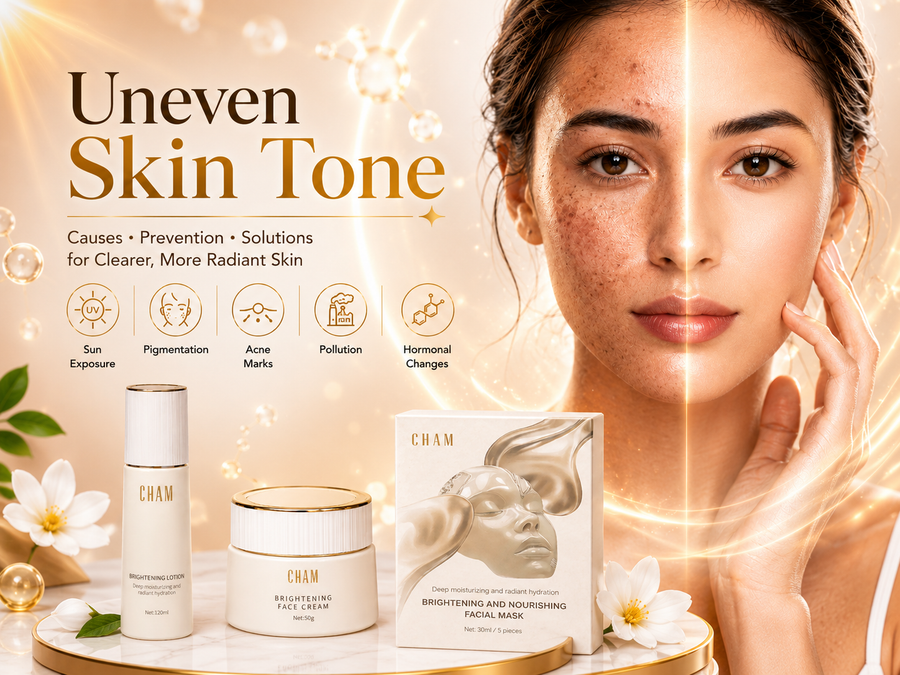
Cham Skincare Product Placement
For a simple routine, Cham can position:
-
Cham Brightening Face Wash for gentle cleansing
-
Cham Brightening Face & Body Serum for hydration and even tone support
-
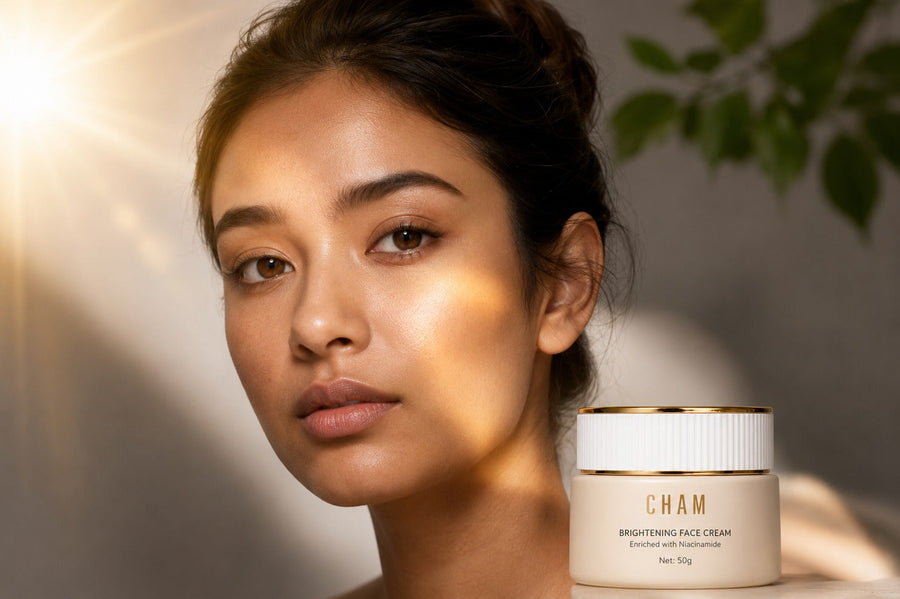
Cham Brightening Face Cream for moisturization and barrier care
-
Cham Body Lotion for daily body hydration
Image Ideas for This Blog
-
Split image: hydrated skin vs dry skin
-
Ingredient graphic: Hyaluronic Acid, Glycerin, Ceramides
-
Morning skincare routine flatlay
-
Close-up of glowing Indian skin
-
Cham products on cream/gold background
FAQ
What is the difference between hydration and moisturization?
Hydration adds water to the skin, while moisturization helps prevent that water from escaping.
Can oily skin be dehydrated?
Yes. Oily skin can still lack water and feel tight, dull, or rough.
Do oily skin types need moisturizer?
Yes. Oily skin needs lightweight moisturization to support balance and barrier health.
How can I improve hydration?
Use a gentle cleanser, hydrating serum, moisturizer, sunscreen, and avoid harsh products.
Should I use serum or moisturizer first?
Use serum first, then moisturizer to lock in hydration.
Conclusion
Hydration and moisturization are both essential for healthy skin.
If your skin looks dull, tired, or tight, it may need hydration. If it feels rough, flaky, or uncomfortable, it may need moisturization.
For best results, use both together.
A simple routine with a gentle cleanser, hydrating serum, moisturizer, and sunscreen can help your skin look soft, fresh, and naturally glowing.