These two get compared constantly because both appear on ingredient lists aimed at dark spots. The comparison is real but lopsided: kojic acid is a specialist and vitamin C is a generalist, and pretending they are interchangeable rivals obscures what each one is actually for.
How each one works
Kojic acid does one thing. It binds the copper inside tyrosinase, the enzyme that sets the pace of melanin production, and slows it. Less new pigment gets made, skin built from now on carries less of it, and the marks already present have to grow out on the normal renewal cycle. That is the entire job description.
Vitamin C touches the same enzyme, but that is a side line. Its main character is antioxidant. UV and inflammation generate oxidative signals, and those signals are part of what tells pigment cells to switch on in the first place. Vitamin C quiets some of that upstream noise, interferes with the enzyme's copper as well, and does work unrelated to pigment besides, which is why vitamin C products are pitched at dullness and general tone as much as at dark spots.
So for dark marks specifically, the two overlap. For overall tone, vitamin C simply covers more ground. A person choosing between them is usually choosing between a narrow tool and a broad one, not a weak one and a strong one.
The stability problem both share
Here the two ingredients have more in common than their marketing admits: both are fragile.
Kojic acid oxidises on exposure to air and light. The formula discolours towards yellow-brown and the colour change tracks a loss of activity. Pure vitamin C, L-ascorbic acid, is worse. It is notoriously unstable in water, drifts towards yellow-orange as it oxidises, and the classic workarounds (a very acidic formula, pushed concentration) are exactly what makes traditional vitamin C serums sting. Modern formulas often use stabilised derivatives instead, trading some raw potency for a product that survives its own shelf life.
The practical consequence: with both molecules, the real question is not which wins on paper but which formula is still active when it reaches your face. Packaging and colour are honest signals. A kojic acid or vitamin C product that has turned deep yellow-brown has already spent much of itself in the bottle.
Why combination formulas beat single agents
Pigment reaching the surface of skin passes several control points. There is the oxidative signalling upstream that tells pigment cells to work harder. There is the enzyme itself, setting the production pace. And there is a delivery step downstream, where finished pigment is handed to the surface skin cells that display it, which is where niacinamide operates.
One ingredient pushed hard covers one of those points and often irritates on the way. Several moderate ingredients cover more of the pathway and tend to be gentler, which matters because irritation itself drives pigmentation. This is why serious tone-evening formulas are combinations, and why the kojic-versus-C question mostly dissolves when you read real ingredient lists: the two frequently appear together, or each appears alongside other partners.
If the rivalry you have heard about is niacinamide and vitamin C cancelling each other out, that claim has a specific, traceable origin and does not survive contact with it; the story is in niacinamide and vitamin C together. And for kojic acid's closest like-for-like rival, see kojic acid vs alpha arbutin.
What to expect, honestly
Neither ingredient is quick, and impatience causes more disappointment here than either molecule does. Both change what newly made skin carries, and skin replaces itself on a cycle of roughly four weeks, so one full renewal cycle is the floor before anything could be visible. Published pigmentation trials run twelve weeks or more for exactly this reason: shorter studies cannot detect the change they are looking for. Judge a product across renewal cycles, not weekends, and judge it on the look of the marks softening rather than on any promise of their disappearance.
When to be careful
Both ingredients can sting on a compromised barrier, and kojic acid is a known contact sensitiser for a minority of users. If skin is currently reactive, flaking or freshly irritated, the right order of operations is comfort first, actives second. Patch testing before face use is cheap insurance with either ingredient.
Two harder lines. Melasma, spreading pigmentation, or darkening that appeared suddenly belongs with a dermatologist first; cosmetic ingredients are supporting measures for those. And sunscreen is the precondition for everything on this page. Slowing pigment production while collecting daily UV exposure cancels your own effort.
Where this sits in the Cham range
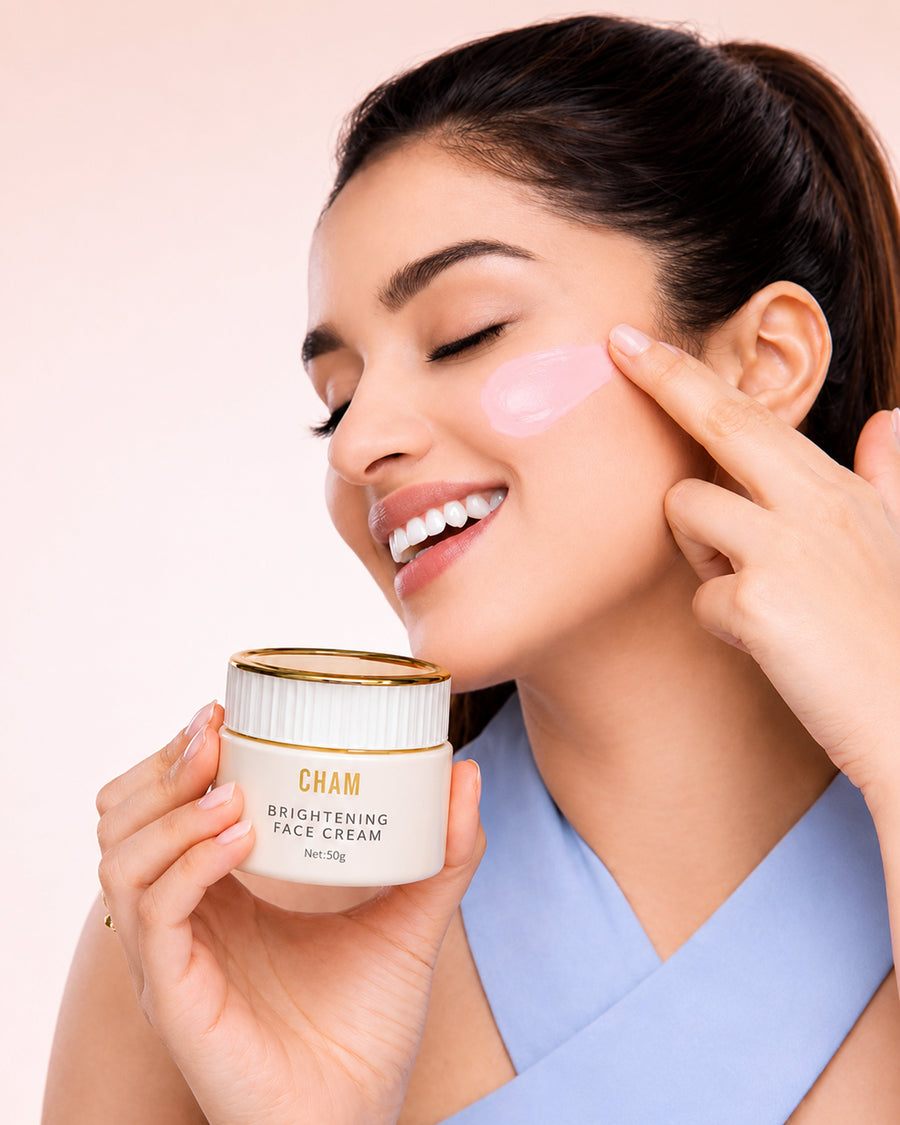
Cham's answer to this comparison is the combination approach described above rather than a bet on one molecule. The Brightening Face Mask pairs two stabilised forms of vitamin C with alpha arbutin and niacinamide in a weekly step, so the enzyme, the upstream signalling and the delivery step are each addressed at a moderate, skin-tolerant level.
Cham does not make a kojic acid product. That is a formulation choice about stability and gentleness, not a verdict on the ingredient, and every product page carries its full ingredient list so you can see exactly what is and is not in the jar.