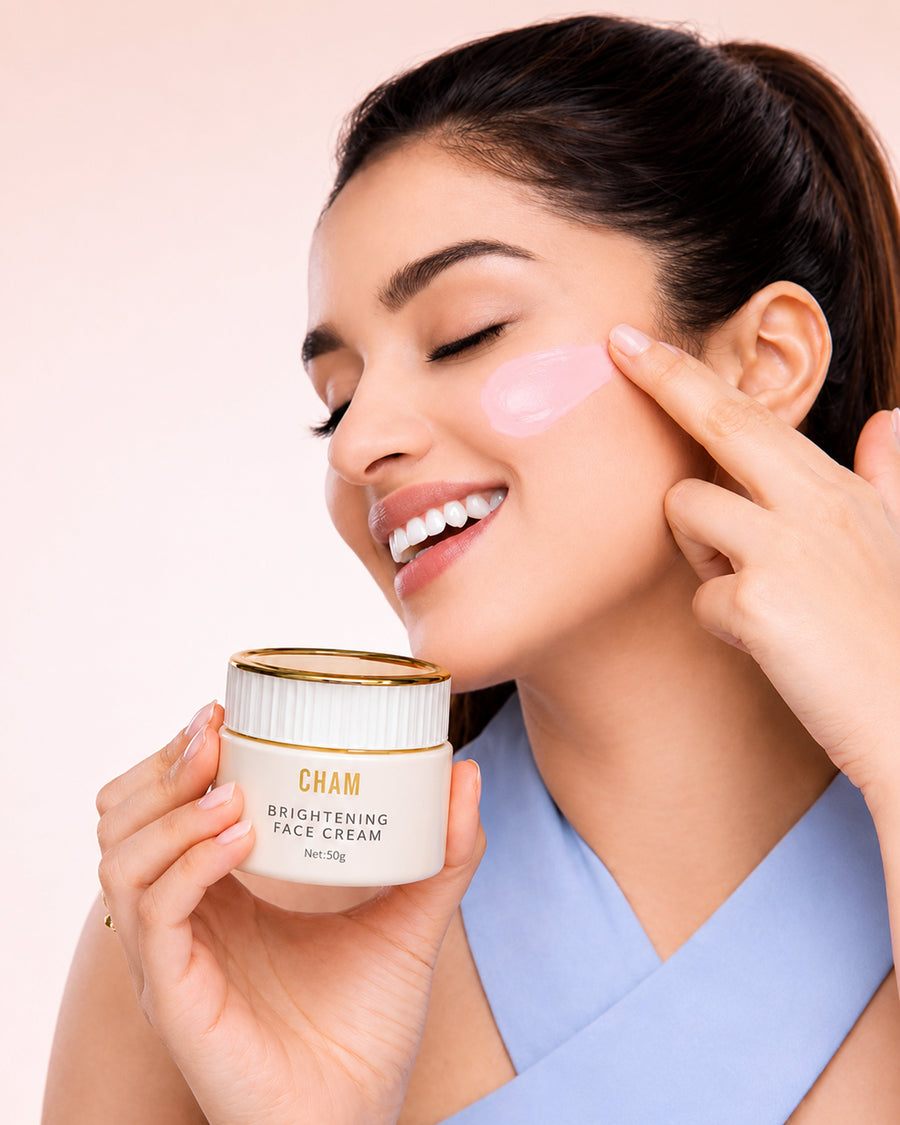
Yes, with a definition attached, and the definition is most of the answer. Vitamin C can help the look of dullness and even the look of uneven tone. It does not and cannot change your skin's natural colour, and nothing sold as skincare should promise that. If you hold onto that distinction, the rest of this post is detail. If a product ignores that distinction, put it back on the shelf.
What brightening means, and what it never means
Brightening, used honestly, describes two visible changes: skin that reflects light better, and tone that looks more even, with marks sitting closer to the skin around them. It never means lightening, whitening or fairness. Your baseline colour is set by genetics and is not up for negotiation with a serum, and the industry's history of implying otherwise is exactly why the word needs defining before it is used. The full argument lives in what skin brightening means; this post applies it to one ingredient.
Vitamin C earns the honest version of the word through two separate mechanisms, which is unusual. Most tone ingredients have one.
The antioxidant route
Ultraviolet light and pollution generate reactive molecules, free radicals, in the skin's upper layers. These do two kinds of visible damage. They degrade the surface's finish directly, which reads as dullness, and they act as a signal that nudges pigment cells toward producing more. Vitamin C is an antioxidant: it neutralises a share of those molecules before they get their work done. That is protection rather than transformation, less new damage today, which shows up over time as tone that drifts less.
Dullness has other parents too: rough surface texture that scatters light, dehydration, a build-up of dead cells overdue for shedding. An antioxidant addresses only its own corner of that problem. The full inventory of reasons skin goes flat, and which habit answers which, is in why skin looks dull.
The pigment route
The second mechanism is more targeted. Melanin is made by the enzyme tyrosinase, and vitamin C interferes with that enzyme's work, slowing the production of new pigment. Slowing is the operative word. It does not bleach the pigment already sitting in your skin; it changes the conditions under which the next generation of skin cells is made. As skin renews, marks produced under quieter conditions surface closer to the surrounding tone.
That is why the honest expectation is even, not lighter. Dark marks from old blemishes and sun exposure sit above your baseline, and a production-slowing ingredient lets them drift back toward it. The baseline itself does not move. Skin renews on a cycle of roughly four weeks, so one cycle is the floor for anything visible, and published trials on tone generally run twelve weeks or more because that is how long real change takes to measure.
Pure ascorbic acid versus derivatives
The vitamin C on an ingredient list is not one thing. Pure ascorbic acid is the form with the most evidence and the most potency, and also the least stability and the most attitude: it oxidises quickly and its low pH makes sensitive skin complain. Derivatives, forms like sodium ascorbyl phosphate and ascorbyl glucoside, trade some potency for shelf life and gentleness; they must convert to ascorbic acid in the skin, and the evidence behind them is thinner, though what exists points the same direction.
Neither choice is a scam. They are different bets: maximum effect with a fussy ingredient, or a smaller, steadier effect from one that survives the bottle and the face. Formulas using stabilised forms are making the second bet deliberately.
The non-negotiable partner
Slowing pigment production while collecting unprotected sun is rowing against the current. Daylight is the signal that starts the process vitamin C works to slow, so daily sunscreen decides whether any of the above becomes visible. Cham sells no sunscreen, and the point stands anyway: it is the single most effective tone product money buys, from any brand.
When this isn't for you
- If the goal is a complexion lighter than your natural one, vitamin C will not deliver it and neither will anything else on a cosmetics shelf. That is a promise to walk away from, not shop harder for.
- Melasma, spreading pigmentation, or sudden darkening belong with a dermatologist first. Cosmetics are supporting measures for those conditions, not answers.
- Sensitive or barrier-compromised skin should approach pure ascorbic acid cautiously or choose derivatives; on active irritation, add nothing and let skin settle.
Where it sits in the Cham range
Cham's vitamin C lives in one product: the Brightening Face Mask, a weekly sheet mask carrying two stabilised forms of it alongside alpha arbutin and niacinamide. That is three tone ingredients working different points of the same pathway, in a sealed single-use format that answers the stability problem above. It is the only product in the range containing vitamin C; the daily products are built on niacinamide instead, and every product page carries the full ingredient list for checking.