Dull is a strange word for a skin concern, because unlike dryness or a spot it describes no physical thing. Nobody can point at dullness. It is a description of how skin is behaving in light.
That is not a technicality. It is the whole answer. Once you know that dullness is an optical property rather than a pigment one, it becomes obvious why some products change it quickly and others never do, and why the most heavily marketed fix is usually aimed at the wrong thing entirely.
What is actually happening
Healthy skin reflects light in a fairly organised way. The surface is smooth enough, and hydrated enough, that a good share of the light hitting it bounces back in roughly the same direction. Your eye reads that coherent return as glow.
Skin looks dull when that return becomes scattered. Light goes in, hits an uneven or dry surface, and comes back diffused in every direction at once. Less of it reaches the viewer, and what does reach them is disorganised. The skin reads as flat, grey, tired.
Which means the useful question is what is disrupting that surface, rather than what to add on top of it.
The four things that disrupt it
Surface build-up. Skin sheds cells continuously, and the shed does not always complete cleanly. Cells that should have lifted away stay put, sitting at slight angles to one another. That layer is microscopically rough, and roughness scatters light. This is the most common cause and the fastest to change.
Dehydration. A well-hydrated surface cell is plump and sits flush against its neighbours. A dehydrated one shrinks and its edges lift, which turns a smooth plane into a textured one. This is why skin can look dull while being oily: dehydration is a water problem, not an oil problem, and the two travel together more often than people expect.
Uneven pigment. Not darkness, unevenness. A face with scattered marks, old spots and patchy tone breaks up as an image even when every individual mark is faint. The eye reads inconsistency as dullness. This is where dullness and pigmentation genuinely overlap.
Circulation and fatigue. Blood flow contributes real colour to skin, and it drops with poor sleep, dehydration, smoking and stress. The greyish cast of a bad week is largely this, and it is the one part of the list that no topical product reaches.
The distinction that matters
Dullness is not the same as skin tone, and conflating the two is how a lot of products get sold in this country.
Tone is pigment: what your skin produces, genetically set at baseline. Dullness is surface behaviour: how light comes back off that skin, whatever its tone. Deep skin can be luminous and fair skin can be flat, because the two properties are independent.
The market runs them together on purpose, because a product that improves light return is easy to describe as one that lightens. It does not. Brightening and whitening are different claims, and dullness sits entirely on the brightening side of that line. Anything sold as a fix for dullness that talks about shades is answering a different question than the one you asked.
What changes it
Roughly in order of how quickly you notice.
Hydration. The fastest lever, and the most underrated. Humectants such as glycerin and hyaluronic acid draw water into the surface layers, and plumped cells sit flatter against each other. This is why skin often looks better immediately after a hydrating step: the surface has physically changed shape.
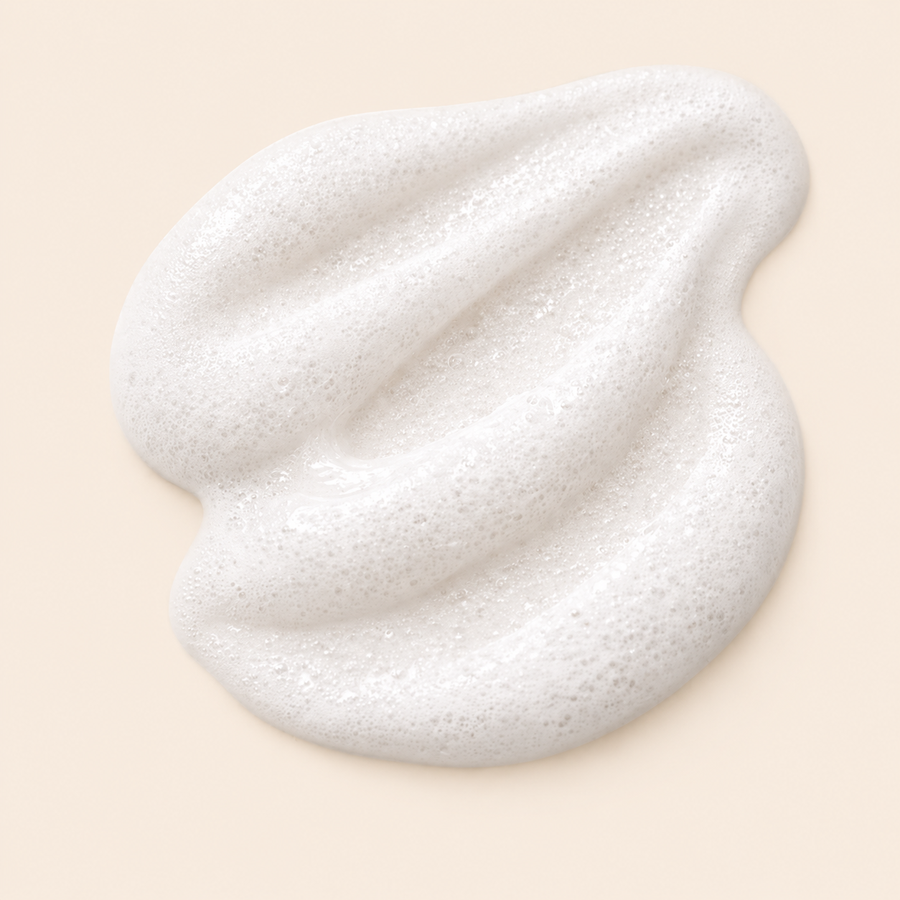
A gentler cleanser. Counterintuitive, but stripping the skin is a common cause of the problem people are trying to cleanse away. A surfactant harsh enough to leave skin tight has removed lipids that were holding water in, and the tight feeling is dehydration arriving. Cham's face wash is built around this: cleansing that leaves the surface intact is a brightening step in its own right, which is not obvious until you have used one that does not.
Encouraging turnover. Mild acids and retinoids help the incomplete shed complete, which smooths the scattering layer. This works, and it is also where most people overdo it. Once or twice a week of something gentle beats a daily acid that leaves skin raw, because inflammation causes its own dullness.
Barrier support. Ceramides and fatty acids rebuild the mortar that holds water in place. This is slower than a humectant and lasts longer, and it is the difference between skin that looks good for an hour after moisturiser and skin that looks good at four in the afternoon. The face cream and body lotion both carry Ceramide NP for this reason. The barrier guide covers the mechanism properly.
Evening the pigment. Slower again, measured in months rather than weeks. Niacinamide, alpha arbutin and vitamin C all act here, and consistency does more than concentration.
Sun protection. Underneath all of it. Uneven pigment is largely accumulated exposure, and without sunscreen the other steps are refilling a bucket with a hole in it.
What does not work
Scrubbing harder. Physical scrubs with jagged particles create micro-damage, and inflamed skin scatters light worse than dull skin does. The immediate smoothness is real and it costs more than it gives.
Stacking acids. Two exfoliating products used together is the fastest way to a compromised barrier, and a compromised barrier is dull, red and reactive at once.
Anything promising a transformation on a fixed schedule. Surface hydration changes quickly. Turnover takes weeks. Pigment takes months. A single timeline covering all three is a marketing device.
Facials as a strategy. A good facial produces a genuine short-lived improvement, mostly through hydration and circulation. It is a nice thing to do and it is not a routine.
When this is not a skincare question
Dullness that does not respond to consistent care, or that arrives suddenly and stays, is worth taking to a doctor rather than a shelf.
Iron deficiency and thyroid conditions both show up in skin, and they are common enough in India to be worth ruling out before spending on actives. Persistent sleep debt and smoking both act on circulation, and no topical product competes with either. A yellowish rather than greyish cast is a different signal again and belongs with a doctor promptly.
If your skin is currently inflamed or reactive, actives aimed at dullness will make it worse. Settle the barrier first, then reassess. Skin that has stopped being irritated often turns out not to have been dull.
Where the Cham range sits
Most of it works on the first two causes rather than the last two, which is the honest division. The serum carries Sodium Hyaluronate for water and Ceramide NP for the barrier, so it acts on surface behaviour directly. The face wash and cream keep that surface intact rather than stripping it. The face mask is the part of the range aimed at pigment, which is the slowest of the four and the one where patience does most of the work.
None of it changes your skin tone, and dullness was never a question about tone.