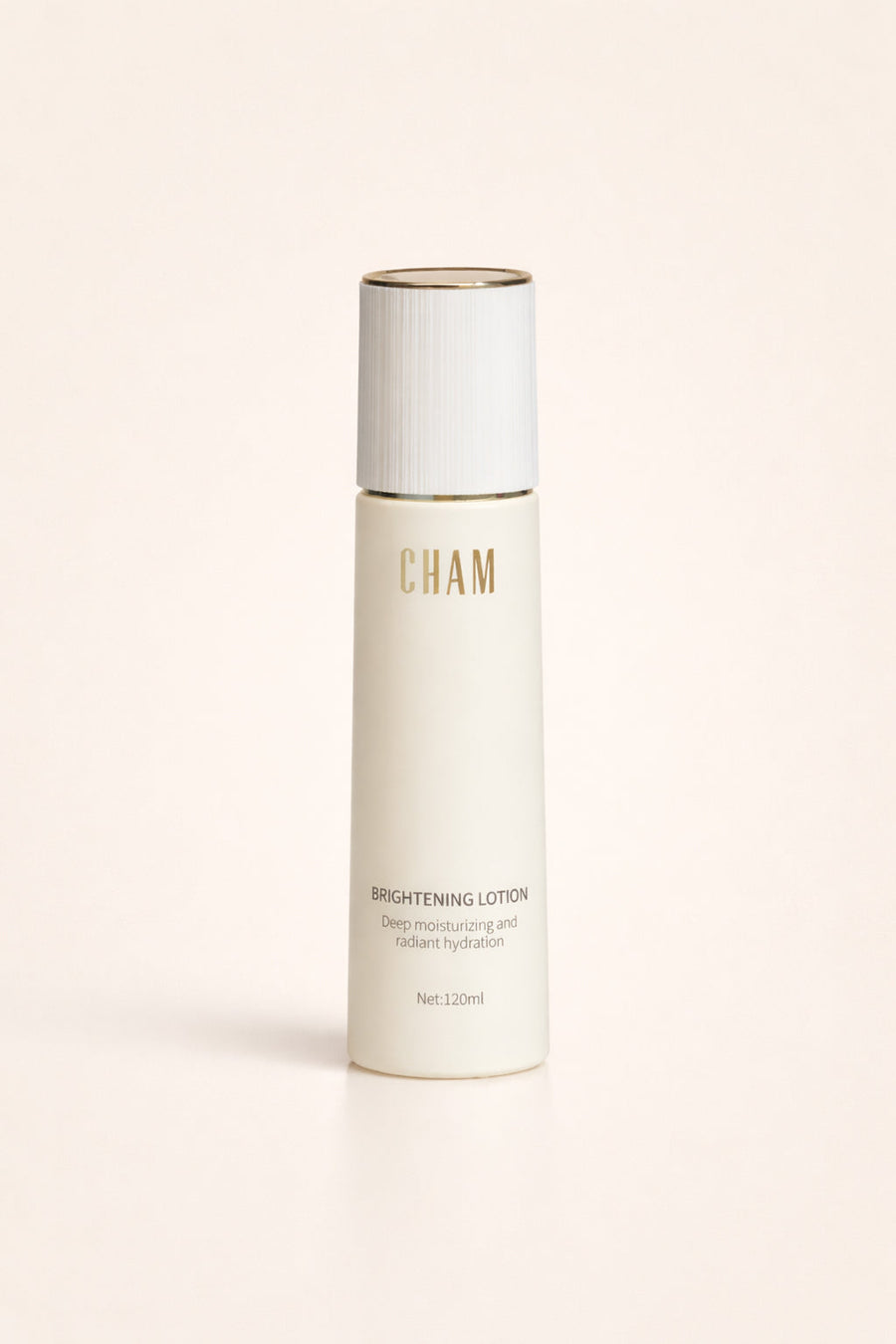
The serum shelf is organised by whatever ingredient is having a year. Choosing well means ignoring that organising principle entirely and sorting by two things the shelf does not display: what your skin is asking for, and what it will put up with. Concern first, then tolerance. Trend does not enter into it.
Start from the concern, not the ingredient
An ingredient is an answer to a question. Buying the ingredient first is buying an answer and hoping the question fits. So begin with the complaint as your skin states it: tightness, shine, lingering marks, general reactivity. Each maps to a different chemistry, and a serum that is excellent for one is indifferent for another. What a serum even is, next to a moisturizer or a cream, is its own small subject, covered in serum, moisturizer, cream: what each layer is for; the short version is that a serum is a concentrated delivery layer, and the concern decides what is worth delivering.
For dry, tight skin
Dry skin is short of water, lipids, or both, and the serum answer is humectants: glycerin, sodium hyaluronate, panthenol. These bind water into the outer layer. Ceramides alongside are worth having, since a lipid-poor barrier lets the bound water straight back out.
The honest caveat is that a serum is only half the fix for dryness. Humectants add water; they do not keep it in. A serum for dry skin earns its place under a moisturizer, not instead of one, and if the budget covers only one product, the moisturizer wins.
For uneven tone and lingering marks
Marks and patchy tone respond to actives working on the pigment pathway: niacinamide, which slows the handover of pigment into surface cells; vitamin C, which acts on the pigment-producing enzyme and the oxidative signalling upstream of it; alpha arbutin, which slows the same enzyme by another route. Any of these is a reasonable pick, and combinations tend to read better than a single active pushed harder.
The expectation to carry in: pigment sits in cells that must be replaced before anything looks different, and skin replaces itself on a cycle of roughly four weeks, so tone work is measured in cycles, not mornings. Practical use of the most common option is covered in how to use niacinamide serum.
For oily or congestion-prone skin
Texture is the first filter: watery, fast-absorbing formulas, nothing rich, no heavy plant oils in the first few ingredients. Niacinamide is the usual active here, well tolerated at sensible strengths and comfortable in light bases.
Be sceptical of "mattifying" serums as a category. Oil output is set by glands responding to hormones, and no serum changes that setting. What a good serum can do for oily skin is hydrate without heaviness, which matters more than it sounds, because oily skin short of water is a common and uncomfortable combination.
For sensitive skin
Sensitive skin chooses by subtraction. A short ingredient list, no fragrance (including the natural kind: essential oils are fragrance with better publicity), one active rather than a cocktail, and humectants plus soothing agents such as panthenol, allantoin or centella asiatica doing the quiet work. Introduce any newcomer alone, on a small area first, and let a couple of calm weeks pass before it earns the whole face.
Tolerance decides more than potency
Whatever the concern, the serum that works is the one your skin accepts every day. A strong formula used twice and abandoned achieves nothing; a moderate one used nightly gets its cycles. This is also the case against the rotation habit, where several serums take turns through the week. Rotation multiplies cost, multiplies variables when something goes wrong, and gives each active fewer chances to do its slow work. One well-chosen serum, used until it has had fair time, beats the carousel. Application order and timing questions have short answers, collected in when to apply face serum.
When a serum is the wrong purchase
If skin is stinging, flaking or reacting to things it used to tolerate, the barrier needs rebuilding before any active earns a place; a serum on compromised skin mostly buys irritation. If the concern is melasma, pigmentation that is spreading or changing, or acne beyond the mild, the efficient first purchase is a dermatologist appointment, and the serum can wait for the supporting role it honestly plays. And if there is no sunscreen habit, tone-focused serums in particular are a poor use of money, since daily UV keeps restarting the process they work against. Cham does not sell a sunscreen; that job needs filling from elsewhere either way.
Where this sits in the Cham range
Cham makes one serum, the Brightening Face & Body Serum, and it is built along the tolerance-first lines above: niacinamide as the single headline active, carried with sodium hyaluronate, panthenol, allantoin, Ceramide NP and centella asiatica. It suits the dry, the oily and the cautious for the same reason: humectants and soothing agents around one well-tolerated active. There is no acid, retinol or vitamin C serum in the range to upsell toward. Read the ingredient list before buying any serum, this one included; the first five ingredients tell you what the product mostly is.