Look down any queue and nearly every pair of elbows in it will be a shade or two deeper than the arms they belong to. Dark elbows and knees are close to universal, more noticeable on deeper skin tones, and widely misread as a hygiene failure. They are nothing of the sort. Joint skin darkens because of what joints do, and knowing the mechanism explains both what helps and how much it can help.
Why knees and elbows darken
The skin over a joint has a hard job. It folds and stretches thousands of times a day, presses into desks and floors, and rubs against sleeves and hems. Skin answers repeated mechanical stress the way it answers any other irritation: it thickens its outer layer for protection, and its pigment cells raise their output. Friction is a pigment trigger in its own right, no sunlight required; skin getting darker without sun covers the wider family of triggers.
Dryness finishes the picture. The skin over elbows and knees carries very few oil glands, so it dries out and roughens faster than the skin around it, and a rough surface scatters light instead of reflecting it. Thickened skin, extra melanin and a dry, matte texture stack into the familiar grey-brown look.
Sun adds its share on top. Elbows and forearms spend more bare hours in daylight than almost any other skin, and UV deepens pigment that friction has already raised. Anyone working on their elbows in summer is working against that background too.
One more piece of context: in most people, and especially in melanin-rich skin, joint and fold skin simply runs a little deeper than the rest. Some of what a mirror shows is baseline anatomy, not a change to be pursued.
What honest care looks like
Because the causes are friction, thickening and dryness, care means working on exactly those three things and nothing more exotic.
Reduce the friction where you can. Leaning on elbows at a desk, kneeling on hard floors, rough or tight fabric moving over the same spot all day: these are habits and environments, and small changes (a cushion, a sleeve that skims rather than grips, catching yourself mid-lean) remove the trigger at its source. It is the slowest lever and the one that actually addresses the cause.
Moisturise consistently. A moisturizer with humectants and emollients softens the thickened surface and keeps it supple, and smoother skin reflects light more evenly, which alone reads as less dark. Niacinamide, used steadily, helps even the look of tone over time. Twice a day after washing beats an occasional heavy session.
Stay gentle. Scrubbing feels intuitive and works against you, because scrubbing is friction, the very trigger that built the darkness. The same goes for lemon, baking soda and other kitchen abrasives: they irritate, and irritated skin makes more pigment, not less. Wash normally, pat dry, moisturise.
What to expect
Slow and partial, said plainly. Texture responds first: with consistent moisture, the roughness and grey dryness soften noticeably. Tone evens more gradually, over months, and joint skin will most likely always sit somewhat deeper than the surrounding arm or leg. That remaining difference is anatomy, not failure, and chasing it with harsher methods tends to darken rather than fade it. Regard any before-and-after photo promising uniform joints with suspicion; lighting does most of the work in those.
When darkening deserves a doctor
The story above covers most dark elbows and knees. There is one pattern that deserves a check-up rather than a lotion. Darkening that is velvety or thickened to the touch, that sits in body folds (the back of the neck, the armpits, the knuckles, the groin) and that has arrived noticeably over months can be a pattern clinicians call acanthosis nigricans, which sometimes accompanies insulin resistance and certain other conditions. That is not a diagnosis to make from a blog post, and having darker joints does not mean you have it. It is simply a reason to let a doctor look, especially alongside weight changes or a family history of diabetes.
Itchy, scaly or flaky patches over joints are a separate case, eczema and psoriasis territory, and they often leave pigment behind as they settle. A clinician can tell these apart quickly.
Where this sits in the Cham range
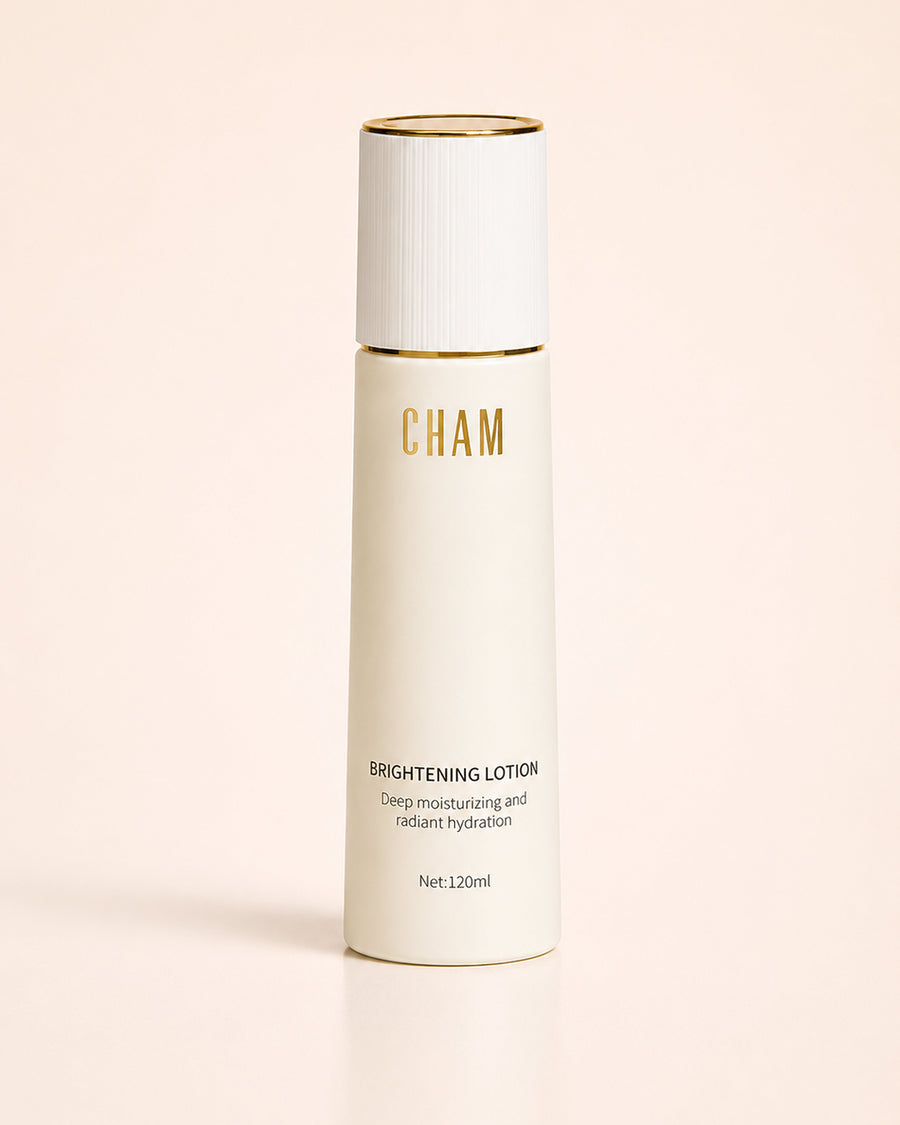
The one Cham product with a place in this routine is the Brightening Body Lotion, which covers the moisturising lever: niacinamide for the look of tone, ceramide NP and shea butter for the barrier, in a light texture that makes twice-daily use realistic. That is the honest extent of its role. It does not change what kneeling and leaning do to skin, and no lotion does. (If you are unsure how a body lotion differs from the moisturizer on your bathroom shelf, body lotion vs moisturizer sorts the categories out.)
A cushion under the knees, a little less weight on the elbows, and a plain coat of lotion morning and night will do more for joint skin than any scrub ever has.
Elbows and knees are one zone of seven. The body zone map covers the rest, neck to legs, each with its own cause and its own honest plan.