Ask a room of people whether their skin is sensitive and most hands go up. The word is doing several jobs at once, and sorting out which one applies to you matters more than buying anything labelled for it.
What the word means
There is no test for sensitive skin in ordinary practice. It describes skin that stings, burns, itches or flushes in response to things most skin tolerates: a new product, heat, wind, hard water, a rough towel.
Two things usually sit underneath. The outer barrier lets irritants through more easily than it should, and the nerve endings in the skin fire at a lower threshold.
Three different situations
Skin that has always been this way. Some people have reacted easily since childhood, often with a personal or family history of eczema, asthma or allergies. This is a tendency to manage, and it stays.
Skin that became this way. This is the commonest version, and it is caused by the routine itself: too many actives started together, daily exfoliation, a foaming cleanser twice a day, a retinoid introduced too fast. The skin was fine a year ago and now stings with everything. It recovers when the cause stops, which is why sensitive is better thought of as a state than a skin type.
A skin condition. Rosacea, eczema, seborrheic dermatitis and contact allergy all present as "sensitive skin" at first. Lasting redness across the cheeks and nose, flaking around the eyebrows and the sides of the nose, or a rash that follows the outline of where a product went are all reasons to see a dermatologist. No cosmetic routine sorts these out.
How to tell which
If plain water or a bland moisturiser stings, the barrier is impaired, and the second situation is the likeliest.
If the reaction follows one product or one family of products, an allergy to a specific ingredient is possible. A dermatologist can patch test for it properly.
If the face flushes with heat, spicy food or alcohol and stays red afterwards, that pattern points to rosacea.
What to change
Cut the routine down. For a few weeks use a gentle low-foam cleanser, a plain moisturiser and sunscreen, and stop every exfoliant and strong active. Over-exfoliated skin describes how the recovery goes.
Wash with lukewarm water and pat dry.
Choose a moisturiser built on barrier ingredients such as ceramides and glycerin. Skin barrier repair explains what they do.
Bring products back one at a time, two weeks apart, with a patch test first. If two things are introduced together and the skin reacts, there is no way to know which was responsible.
Prefer fragrance-free products while the skin is reactive. Fragrance in skincare covers why it is the most frequent culprit and why "natural" scents count.
Mineral sunscreens sting less often than chemical filters do, and the comparison is worth reading if sunscreen is the product that burns.
What the labels are worth
"For sensitive skin", "hypoallergenic" and "dermatologically tested" have no legal definition for cosmetics. A brand can print them without meeting any standard. Skincare label claims goes through which phrases carry meaning, and the ingredient list remains the only part of the pack that has to be true.
A new product that causes spots is a separate question, and purging or reaction helps tell the two apart.
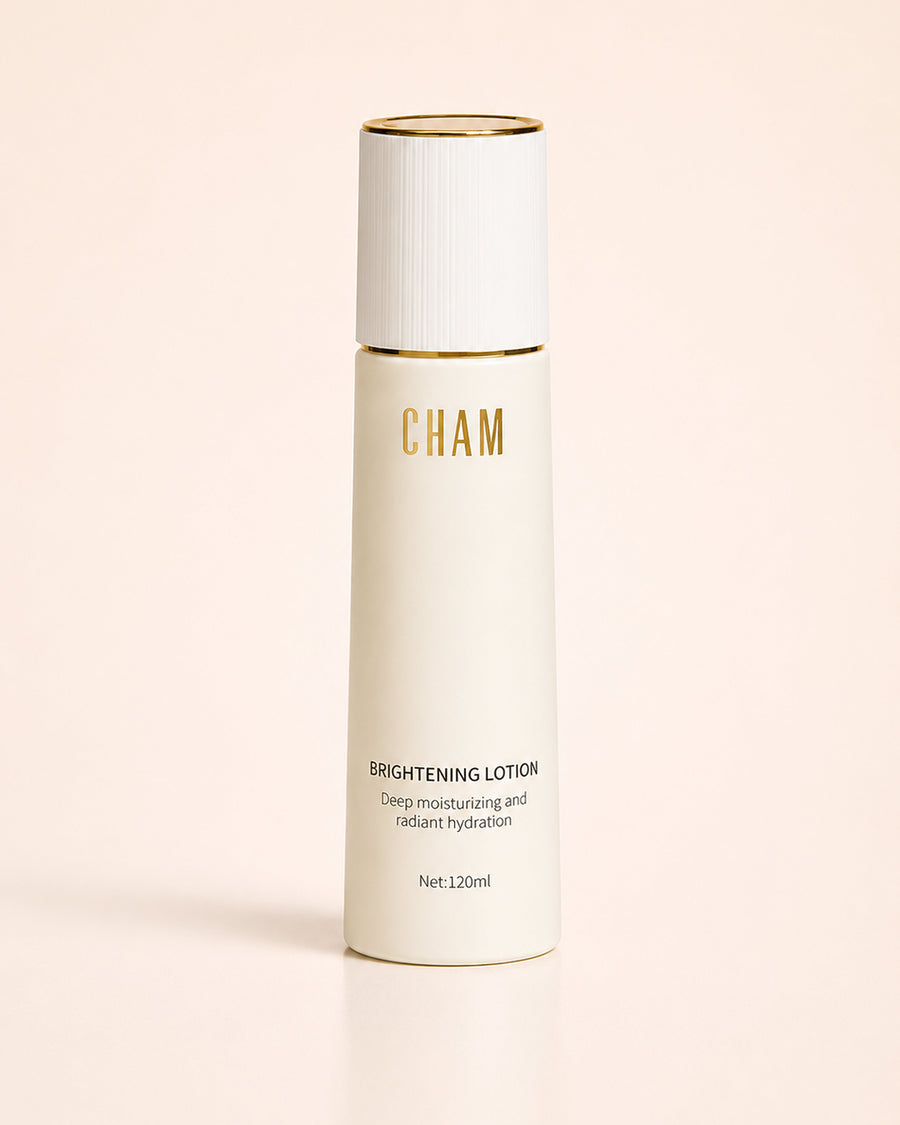
Where the Cham range fits
The range is built around niacinamide, glycerin and ceramide NP, and it contains no exfoliating acids and no retinoid.
Two cautions apply. The face wash, serum and cream contain Rosa damascena flower water, which carries its own aromatic compounds, so they are not fragrance-neutral. And the face mask contains two forms of vitamin C. Reactive skin should patch test each product and start with one, the same as with any other brand. A small number of people also flush with niacinamide, which the side effects post explains.