The shelf labels read like separate categories: moisturizer here, body lotion there, body cream beside it, body butter on the top shelf. They are one category. Moisturizer is the job description, and lotion, cream and butter are grades of the same product at different thicknesses. Once that clicks, the choice stops being about names and becomes a short question about your skin and your weather.
Moisturizer is the umbrella term
A moisturizer is anything formulated to raise and hold the water content of the outer skin. Every one works through some mix of the same components: humectants such as glycerin and hyaluronic acid draw water into the surface, emollients smooth the gaps between surface cells, and occlusives such as shea butter and waxes slow water from escaping. A watery gel qualifies. So does a dense butter. The word says nothing about texture, face or body, or quality. It names the job.
Drawing water in and sealing water in are genuinely different tasks, and knowing which one your skin is short of is the quickest route to a good choice. That split has its own explainer: hydration vs moisturization.
Lotion, cream and butter are viscosity grades
Most moisturizers are emulsions, water and oil held together by an emulsifier, and the ratio sets the name.
A lotion is the most watery grade: high water phase, modest oil phase, pourable or pumpable, quick to spread over a large area and quick to sink in. A cream shifts the ratio toward oil. It is thicker, usually sold in a tub or tube, slower to absorb, and it leaves more of itself behind on the surface. A butter is barely an emulsion at all, dominated by solid fats, and sits on the skin as a deliberate sealing layer.
Nothing about that ladder makes richer better. Richer means heavier to wear and more occlusive. Whether that is an upgrade depends entirely on the skin underneath and the air around it.
Body cream vs body lotion
Same ladder, one rung apart. A body lotion suits ordinary skin in ordinary weather: it covers a whole body in a minute and lets you dress without waiting. A body cream earns its place when skin is visibly flaky or rough, in cold dry seasons, and on the chronic dry zones, meaning shins, elbows, knees and heels.
Plenty of people sensibly run both. Lotion through the humid months and cream in winter, or lotion for the whole body with cream kept for the rough spots. Two useful signals for tuning the grade: tightness within an hour of a shower means the last application was too light, and a greasy film still sitting on the skin at bedtime means it was too heavy. Applying either grade to still-damp skin after a shower makes it work harder, because there is water present to seal in.
Why body skin tolerates richer textures than facial skin
Body skin is thicker and has far fewer oil glands, so it accepts heavy occlusion without protest; there is very little in a shin to clog. Facial skin is thinner, densely packed with sebaceous follicles, and already partly oiled by its own output, which is why the butter that rescues your elbows can overwhelm a cheek. This is also why the categories should not be swapped casually in one direction, an argument made in full in can you use body lotion on your face.
Climate finishes the picture. Humid air slows evaporation and flatters lighter grades; dry air, heated indoor air and long winters pull water out of skin faster and justify the heavier ones. The same person often needs a different answer in different months, and moving up or down one rung is the whole adjustment.
What the names will not tell you
None of these grade names is regulated. One brand's lotion is another brand's cream, and words like nourishing or replenishing have no fixed meaning at all. The texture, fortunately, cannot lie. A test amount on the back of the hand answers the real questions in a few seconds: how fast it sinks in, what film it leaves, whether the skin underneath feels sealed or merely coated. Trust that over the noun on the front of the bottle.
One more thing outranks the choice of grade: regularity. A lotion applied daily does more than a butter applied whenever someone remembers, because the water skin loses every day has to be replaced on the same schedule. Pick the grade you will actually reapply.
The format finder puts this ladder beside the other comparisons people search for and narrows it to a grade in three questions: where, what for, and how the skin there behaves.
Where Cham sits on the ladder
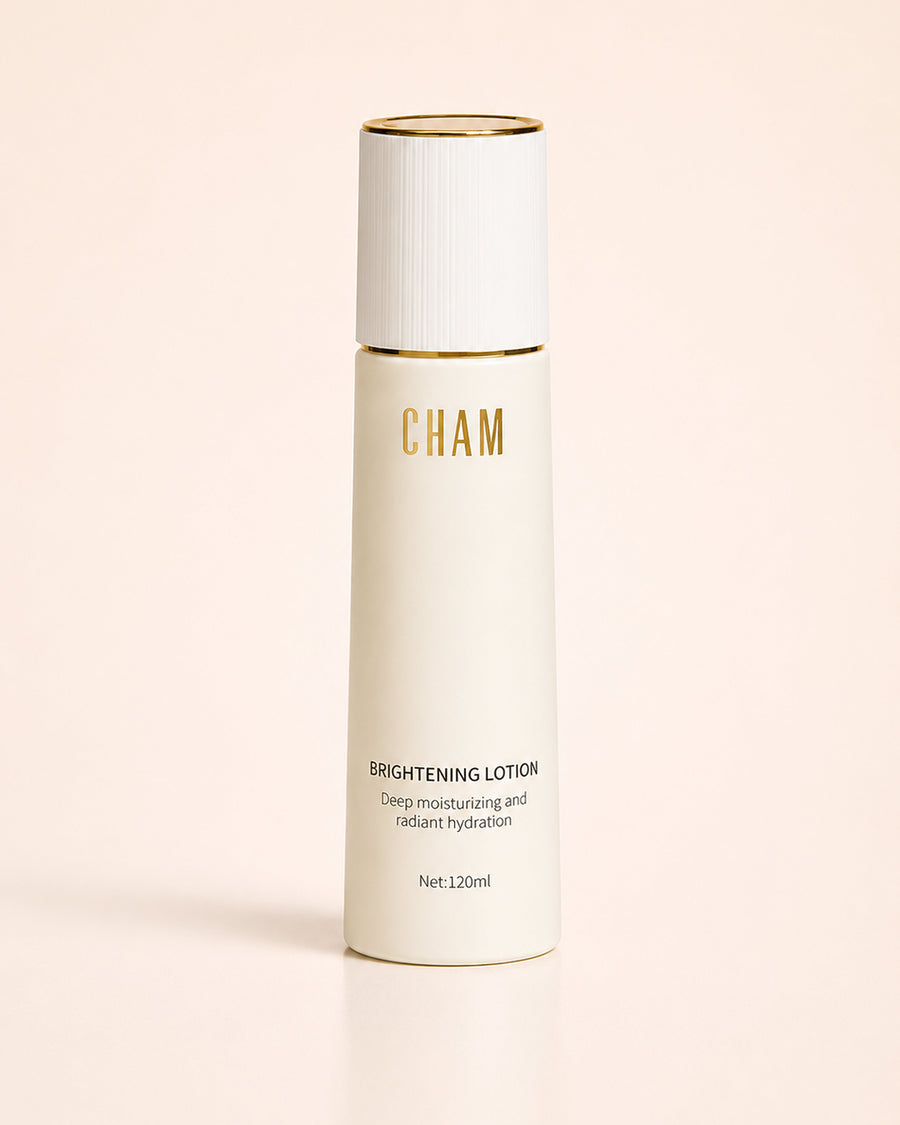
Cham makes one body moisturizer, the Brightening Body Lotion, and it sits deliberately at the light end of the ladder: a lotion-grade emulsion carrying niacinamide, Ceramide NP, sodium hyaluronate and a measured amount of shea butter, built for daily wear in mostly warm weather. There is no Cham body cream and no body butter. If your winter shins need a heavier grade, that is a different product, and Cham does not currently make it. The product page carries the full ingredient list, which settles any question a label cannot.