Underarm darkening is one of the most searched skin concerns in India and one of the most consistently mishandled. The standard response is to buy something that promises to lighten, apply it to skin that is already irritated, and find months later that the area is darker than when it started. The reason is simple: in most cases the darkening is not a pigment problem that arrived on its own, it is the visible record of something being done to the skin repeatedly.
The four common causes
Friction. Skin that rubs against itself or against fabric thickens and darkens in response. Tight sleeves, synthetic fabrics in humid weather, and body weight that brings the area into contact all produce it. This is the same mechanism behind dark knees and elbows, and it responds to less rubbing rather than to any cream.
Hair removal. Shaving leaves the darker base of the hair visible just under the surface, which reads as shadow rather than pigment. Repeated shaving, waxing and threading also inflame the follicle, and inflammation in deeper skin tones leaves pigment behind reliably. Hair removal creams add a chemical irritant to the same area on top of that.
Product irritation. Alcohol-heavy deodorants, fragrance, and antiperspirants applied to freshly shaved skin cause low-grade inflammation that never quite settles. It rarely stings enough to be noticed, which is why it runs for years. Fragrance in skincare covers why the ingredient most likely to be responsible is also the one most likely to be listed last.
Acanthosis nigricans. This one looks different and matters more. The skin is velvety and thickened rather than simply darker, the border is soft rather than sharp, and it usually appears in more than one fold at once: underarms, the back of the neck, the groin. It is associated with insulin resistance, polycystic ovary syndrome, thyroid disorders and some medications. Dark neck causes goes into it in more detail, because the neck is where people usually notice it first.
If the darkening is velvety, appeared over a year or two without a change in shaving habits, and shows up in several folds, that is a reason to see a doctor rather than to buy a body product. The skin is reporting something the skin itself cannot fix.
Telling them apart
Pull the skin taut under good light. Friction and post-inflammatory pigment sit flat in the skin and the colour stays put. Shaving shadow largely disappears when the hair is removed at the root rather than the surface, so it changes with the method. Acanthosis has texture: it is slightly raised and feels different from the skin next to it, which is the one sign worth learning.
The other useful check is the pattern. Product irritation follows the shape of where the deodorant lands. Friction follows the fold. Shaving darkening covers the whole shaved zone evenly.
What actually helps
The first move is to stop adding to it, which is unglamorous and works better than anything else. Switch to a fragrance-free deodorant, leave a day between hair removal and reapplying it, avoid applying anything to skin that is freshly shaved, and give tight synthetic sleeves a rest in humid months. For many people that alone changes the trajectory, because the skin was never given a chance to settle.
Once the irritation stops, the existing pigment fades the way post-inflammatory pigment fades everywhere: slowly, over months, and faster with less friction. Niacinamide is a reasonable active here because it is well tolerated on thin, frequently irritated skin and it slows the transfer of pigment into surface cells. Alpha arbutin and vitamin C are options too, though both are more likely to sting on an area that has been shaved.
Exfoliating acids are worth approaching carefully. They help with the thickened surface, and they also irritate easily in a fold that stays warm and damp, which is exactly the loop being broken.
What to avoid
Skin lightening creams sold specifically for underarms are the highest-risk category in Indian skincare. Many contain steroids, unlabelled hydroquinone or mercury compounds, all of which produce fast visible lightening followed by rebound darkening, thinning skin and stretch marks in a fold that already sits under tension. How to tell whether a cream contains a steroid is the relevant read, and the short version is that a result in days is the warning sign, not the selling point.
Bleach, lemon and baking soda belong in the same bin. Underarm skin is thinner than the skin on the arm around it and reacts accordingly.
Honest limits
Underarm skin is naturally a shade or two deeper than the arm in most people, and no product changes that baseline. What is reachable is the difference between baseline and the darkening that friction and irritation added on top, which for most people is the larger part of it.
The body pigmentation zone map covers how the same causes play out in other areas, since underarms, the neck and the inner thighs usually appear together for the same reasons.
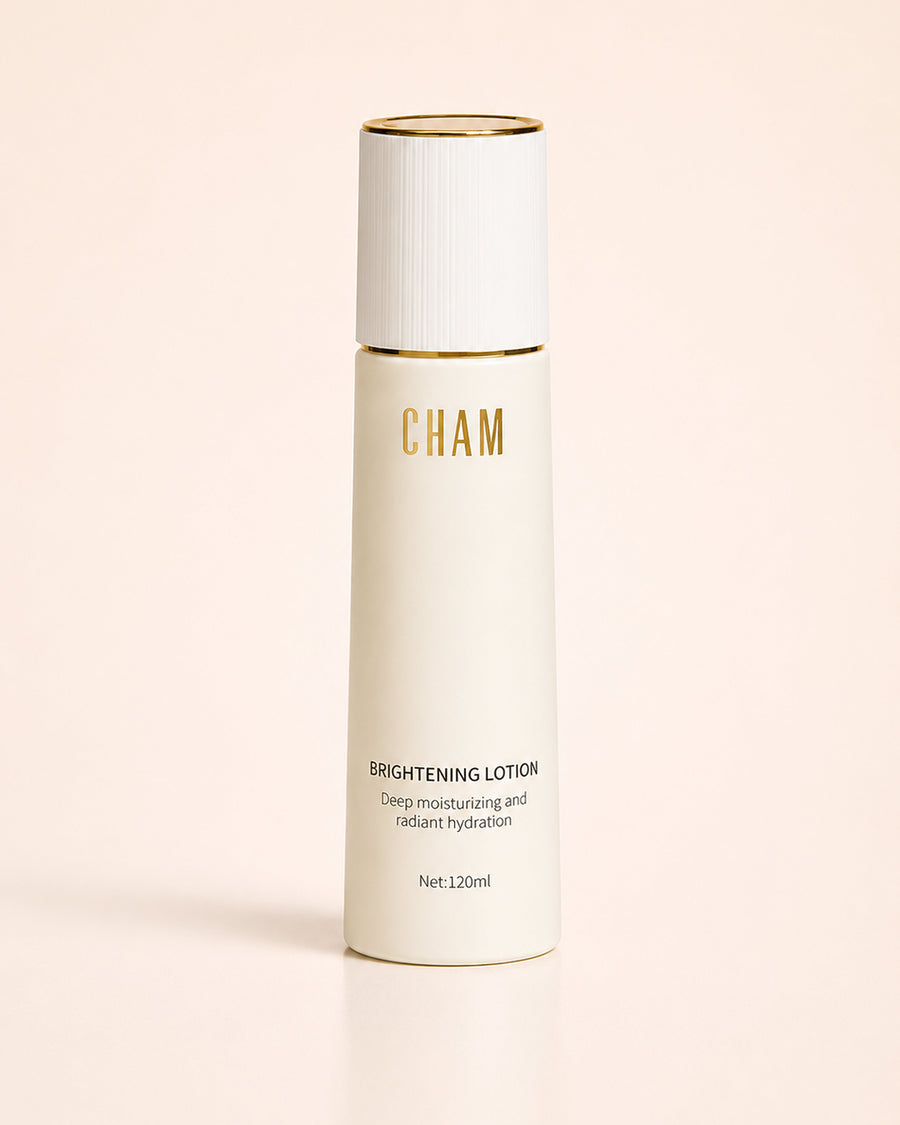
Cham makes no deodorant and no underarm-specific product. The Brightening Face and Body Serum and the Brightening Body Lotion both carry niacinamide and are formulated to be used below the neck, which is the only honest claim available here: they belong to the slow half of this, after the friction stops.