Niacinamide sits near the top of every list of well-tolerated actives, and for once the list is right. It is water soluble, stable across a wide range of formulas, comfortable at the concentrations most products use, and it has been studied for decades. That does not mean nothing ever goes wrong. It means the things that go wrong are specific, mostly mild, and regularly blamed on the wrong ingredient. This post goes through them one at a time.
What niacinamide is, briefly
Niacinamide is the amide form of vitamin B3. In skin it supports the production of ceramides, the lipids that hold the outer layer together, and it interferes with the hand-over of pigment from the cells that make it to the cells that display it. Neither mechanism involves peeling, stripping or acid. Keep that in mind, because it explains most of what follows.
The flush is real
Niacinamide has a close chemical relative, nicotinic acid, also called niacin. Nicotinic acid dilates the small blood vessels near the surface of the skin, which shows up as sudden warmth and redness. Niacinamide itself does not do this at sensible levels, but two situations bring the flush into play.
The first is concentration. Very high strength formulas, the ones advertising numbers like twenty per cent, push more of the ingredient at the skin than most faces need, and more than the well-studied range covers. Warmth, tightness and temporary redness are more common up there, and there is no good evidence that the extra strength buys a better result.
The second is formula quality. Poorly made or badly stored products can carry nicotinic acid as an impurity, or slowly convert to it over time. That is when a niacinamide product produces the classic flush. It passes on its own and it is not damage, but it is uncomfortable, and it is a fair reason to prefer moderate concentrations from brands that publish a full ingredient list.
Purging is a myth here
Purging describes something real but narrow. Ingredients that speed up skin cell turnover, chiefly retinoids and exfoliating acids, can pull developing blemishes to the surface faster than they would have arrived on their own, so skin looks worse before it settles.
Niacinamide does not speed up turnover. It is not an exfoliant, it pushes nothing to the surface, and it has no mechanism by which it could purge. When breakouts follow a new niacinamide serum, the honest suspects are elsewhere: a rich base the skin dislikes, another active sharing the bottle, a routine change that happened the same week, or a breakout that was coming anyway.
The distinction matters because the advice differs. Purging from a turnover ingredient is usually a reason to wait. A reaction is a reason to stop. Telling one from the other is a post of its own: purging versus a reaction.
When irritation is the rest of the formula
A serum is never just its headline ingredient. Fragrance and essential oils are the most common causes of stinging in any leave-on product. Denatured alcohol high on an ingredient list can dry skin out. Some products stack several actives at once, and the combination, rather than any single molecule, is what a face objects to. When a niacinamide serum causes trouble, read the full list before blaming the molecule on the front label. If niacinamide were a common irritant in its own right, its long record across cleansers, creams and serums would look very different.
There is also a simpler possibility: a sound product on a barrier that was already struggling. A compromised barrier lets everything through further than intended, and at that point almost anything stings. The useful first step there is not another active but repair, covered in the skin barrier repair guide.
Who should patch test
Ideally, anyone starting a new leave-on product. In practice, the people who should never skip it:
- Skin that has reacted to skincare before, even once.
- A history of eczema, dermatitis or rosacea.
- Anyone using prescription actives, where a new variable muddies the picture.
- A routine that already contains several actives.
The method is boring and it works. Apply a small amount to the inner forearm or behind the ear once daily for a few days, and watch for itching, redness or small bumps. The face is not the place to run the first experiment.
When this isn't for you
- On active eczema, dermatitis or broken skin, leave new actives out entirely and speak to a clinician first.
- With a known allergy to anything on the ingredient list, the headline molecule is irrelevant; the answer is no.
- Mid-reaction is the wrong time to add anything. Strip the routine back to bland basics, let skin settle, then reintroduce one product at a time.
- For pigmentation that is deep, spreading or suddenly changing, a dermatologist is the efficient starting point. A cosmetic serum is a supporting measure, not an answer.
Where it sits in the Cham range
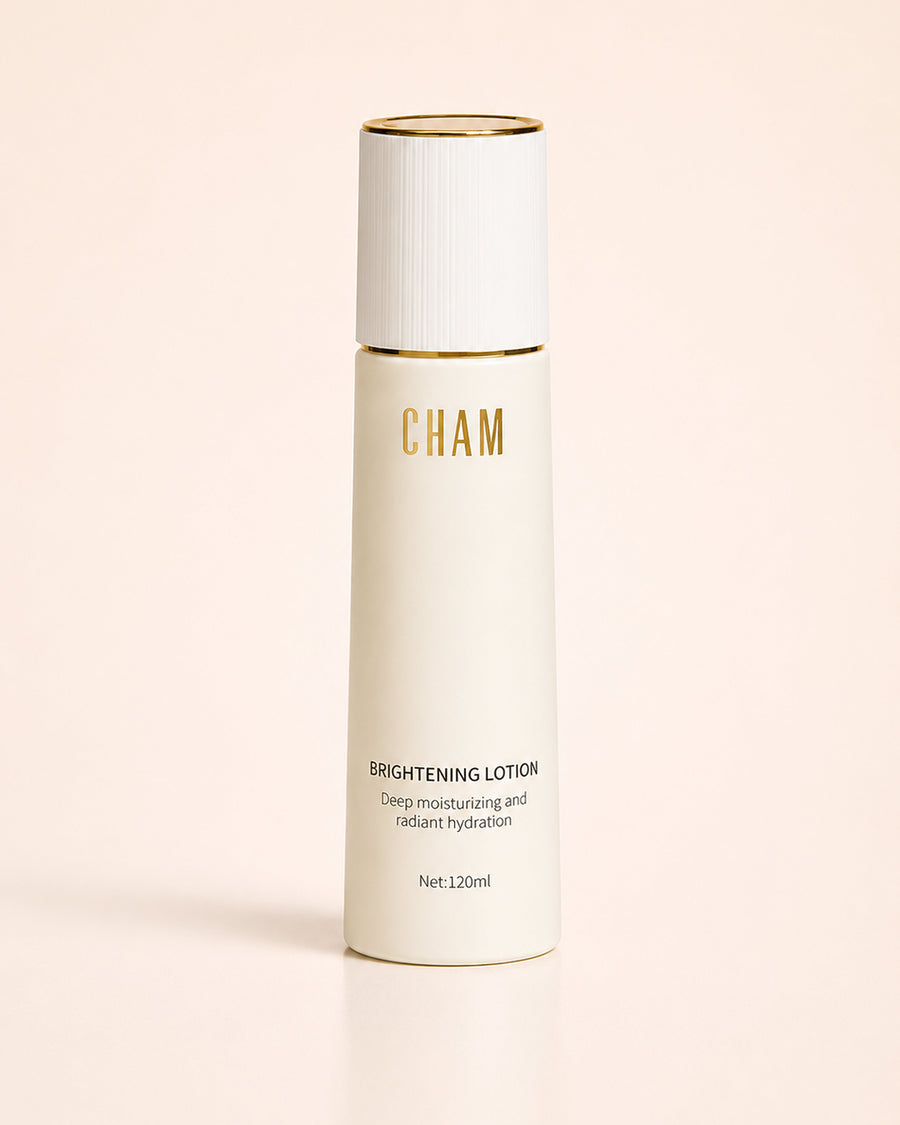
The Brightening Face & Body Serum is built around niacinamide at a moderate, well-studied strength, in a base that leans calm: panthenol, allantoin and centella asiatica, with sodium hyaluronate for water. That construction reflects the argument above. Tolerability is mostly a formulation decision, and a sensible concentration in quiet company is the version of this ingredient most skin gets along with. How to place it in a routine is covered in how to use a niacinamide serum, and every product page carries the full ingredient list, which is the only reliable way to know what a face will actually meet.