Lemon juice gets recommended for tan, dark spots, oily skin and acne marks, usually by someone for whom it seemed to work once. It is the home remedy with the widest gap between its reputation and what it does. The short answer to the question is no, and the reasons are specific enough to be worth knowing.
Why people believe in it
Lemon contains citric acid, which belongs to the same family as the acids in exfoliating products, and it contains vitamin C. Both are real skincare ingredients.
It also gives a quick result of a sort. Juice stings, the skin feels tight, and for a day the face looks a little brighter. That is a crude acid peel plus mild irritation, and it is the whole basis of "it worked".
The acidity
Lemon juice has a pH of about 2. Skin sits around 5. Undiluted juice is far stronger than skin is built to meet, and nothing in it controls how deep the acid goes or how long it acts.
The result is a disrupted barrier: redness, dryness, peeling, and stinging from products that were fine the week before. Formulated acids avoid this by fixing the strength and buffering the pH. AHA and BHA compared covers how the made versions work.
The reaction with sunlight
This is the serious problem. Citrus fruits contain compounds called furocoumarins, which react with ultraviolet light on the skin. The reaction looks like a burn, sometimes with blisters, and it is followed by dark streaks and patches that can last for months.
The pattern gives it away. The marks follow the lines where juice ran or was dabbed.
In Indian sun, this is the common way lemon ends up causing the pigmentation it was applied to fade. Rinsing it off helps less than people assume, because some of it has already soaked in.
The vitamin C that is not there
The vitamin C in lemon juice is present in small amounts and breaks down quickly in air and light. Nothing in the juice helps it into the skin either.
A vitamin C product solves those problems on purpose, with a stable form of the vitamin at a set strength. Forms of vitamin C in skincare explains the difference, and whether vitamin C brightens skin covers what even the good versions can do.
The usual mixes
Lemon and sugar adds scratching to acid. Lemon and baking soda follows a strong acid with a strong alkali. Honey does not buffer lemon, whatever the recipe says.
Packs that combine lemon with turmeric or multani mitti hold the juice against the skin for longer, which is worse. On thin skin such as the underarms it darkens faster than on the face.
If it has already irritated
Stop using it and rinse with cool water. Apply a plain moisturiser, stay out of the sun and wear sunscreen, and leave every active alone until the skin settles. Blistering, or a reaction over a large area, needs a doctor.
A dark mark that follows will fade the way other marks from irritation do. How to fade dark spots covers that process.
What does the jobs lemon is asked to do
For dark marks: sunscreen, niacinamide, alpha arbutin, or a formulated vitamin C. For a tan: time and sun protection, as in how to fade a tan. For oil and clogged pores: salicylic acid.
Where the Cham range fits
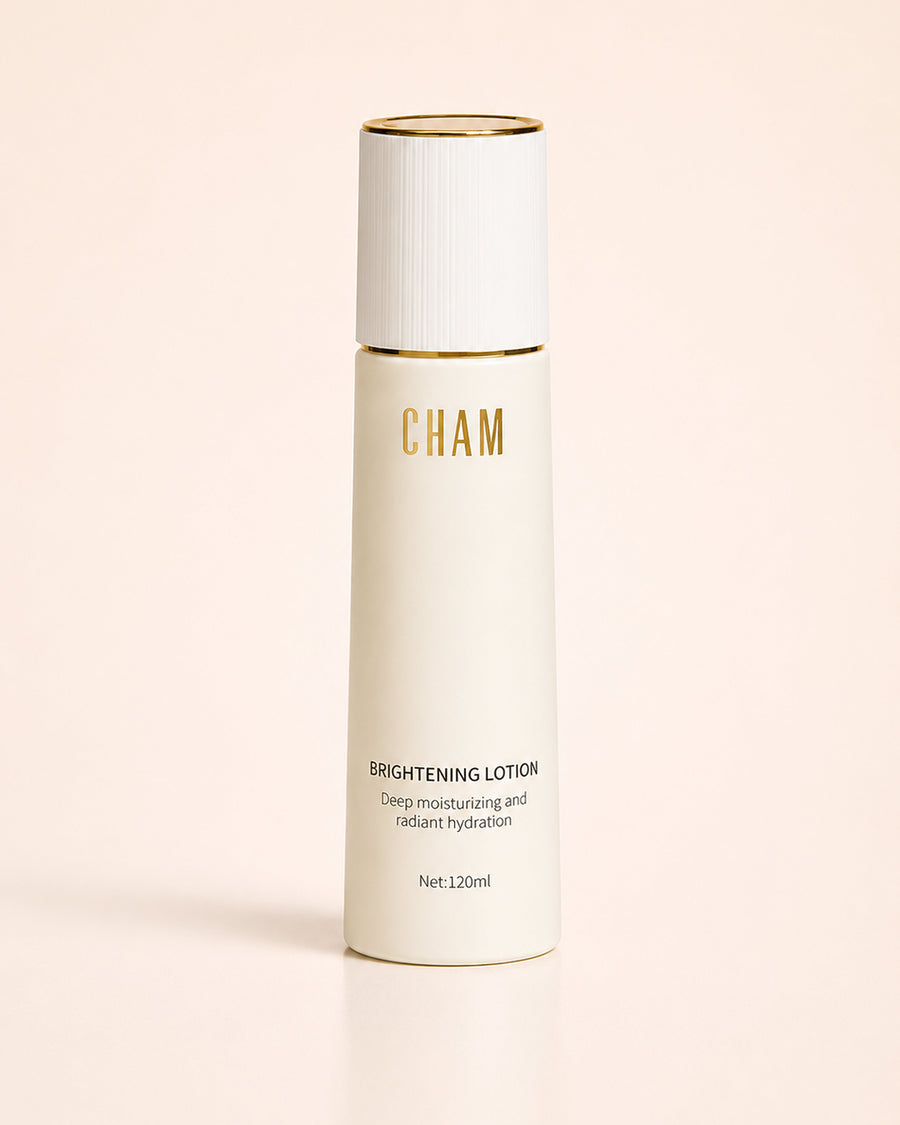
The Brightening Face Mask contains two stable forms of vitamin C, ethyl ascorbic acid and ascorbyl tetraisopalmitate. That is the difference between the vitamin and the fruit.
Lemon in food is fine. It belongs in the kitchen.