Skin that shines by midday and still feels tight after washing sounds like a contradiction, and it sends people down exactly the wrong aisle. The tightness gets read as sensitivity, the shine as the enemy, and the shine usually wins the shopping decision. The combination has a boring explanation: oil and water are separate systems, and one of them is being drained while the other carries on as normal.
Two systems, two dials
Sebum comes from glands, and their output is set mostly by hormones. Washing does not change the setting; nothing over the counter does, and that is worth hearing plainly.
Hydration is a different quantity: the water content of the outermost layer of skin, held in place by natural humectants inside the cells and a mortar of lipids between them. It rises and falls with cleansing habits, weather, hot showers, and what gets applied afterwards.
The two dials move independently. Skin can be high-oil and low-water at the same time, and that pairing is what "oily but dehydrated" means. It is common, it is uncomfortable, and it is usually self-inflicted, which is the good news, because self-inflicted problems can be stopped.
How the loop starts
Shine reads as "too much oil", so the response is degreasing: a strong foaming wash, morning and night, perhaps a scrub or a clay mask on top. Surfactants cannot tell sebum from barrier lipids, so each wash takes some of the mortar with it. Water loss climbs. Skin feels tight an hour after washing, then shines again by noon, because the glands never got the memo and keep producing at their set rate.
A word about the popular version of this story. The claim that stripping skin makes it "overproduce oil to compensate" is repeated on thousands of product pages, and the evidence behind it is thin. It does not need to be true for the loop to be real. Stripping demonstrably raises water loss and irritation while doing nothing to lower sebum output, which is quite enough: you keep all of the shine and buy the tightness on top of it.
What it looks like
Tight or squeaky within minutes of washing, shine a few hours later. Flakes or rough patches sitting over oily zones. Makeup that clings and breaks up unevenly. Fine surface crinkling, especially under the eyes and across the cheeks, that looks worse when skin is at its driest. A dull, tired look on skin that is, technically, well oiled. Any few of these together are the pattern.
The fix runs in the opposite direction
The first move is subtraction. Retire the strong degreaser and wash with something mild and low-foam; the test is that skin should not feel tight a few minutes after rinsing. What the label calls itself matters less than that after-feel, a distinction unpacked in cleanser vs face wash. Alcohol-heavy toners, daily clay and scrubs go in the same drawer.
The second move is adding water back: humectants, meaning glycerin, sodium hyaluronate and their relatives, in a light layer that oily skin will accept. Then a light moisturizer over it, because oily skin still needs its lipid mortar, and water added without sealing leaves the way it came. The difference between adding water and keeping it is its own subject, covered in hydration vs moisturization.
Shine itself can be managed honestly with blotting papers and cosmetic mattifiers, which work at the surface without draining anything underneath. That is a cosmetic patch, and a perfectly respectable one; it just should not be confused with skincare.
Expect the tightness to ease before the shine changes, if the shine changes at all. The realistic outcome is comfortable, hydrated skin that still produces the oil its glands are set to produce. That is not failure. That is the system working as built.
When it is something else
Persistent redness and flaking concentrated around the nose, brows and hairline can be seborrhoeic dermatitis, which is a medical matter, not a hydration problem. The same goes for acne beyond the mild, sudden changes in how skin behaves, or oiliness arriving alongside other changes; a clinician sorts those out faster than any routine adjustment will. Cosmetics manage the comfortable middle of skin behaviour. The edges belong to medicine.
The format finder has a branch for exactly this pattern, tight after washing and shiny later, and routes it to a light layer of water first and a light seal second.
Where this sits in the Cham range
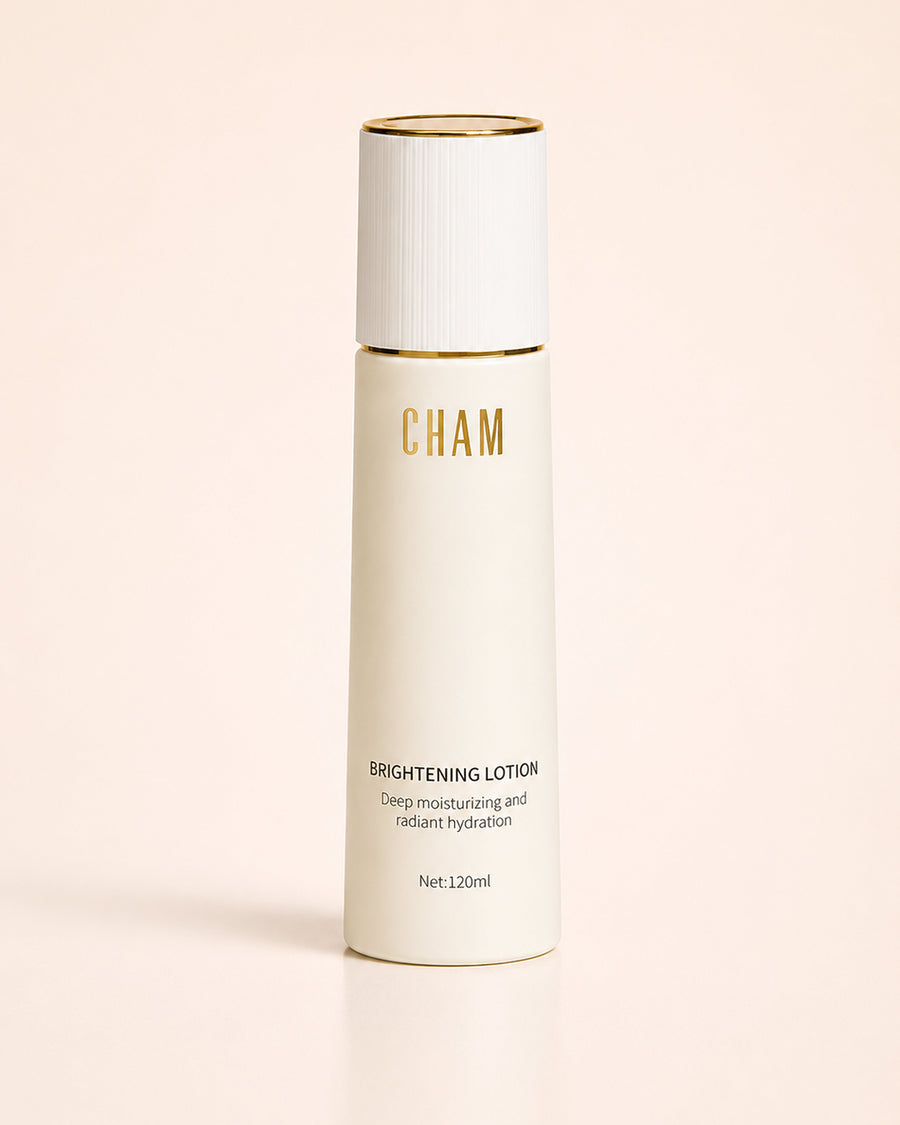
The Brightening Face Cream is the shape of moisturizer this skin state calls for: a light daily texture carrying glycerin and sodium hyaluronate for the water, Ceramide NP and wheat germ oil for the mortar, with niacinamide and centella asiatica alongside. The wash in the range is low-foam for the same reason. Cham makes no clay mask, no scrub and no mattifier, which for once is convenient, because for this problem the missing products are the point. Wash gently, add water, seal it, and let the glands do what they were always going to do anyway.