Packaging uses "hydrating" and "moisturising" as if they were synonyms with different fonts. They name different things, the difference is easy to feel on your own face, and knowing it sorts out a surprising amount of confused shopping. Hydration is water content. Moisturization is keeping that water in and resupplying the fats that hold skin together. Most skin needs both, and in that order.
Hydration is water
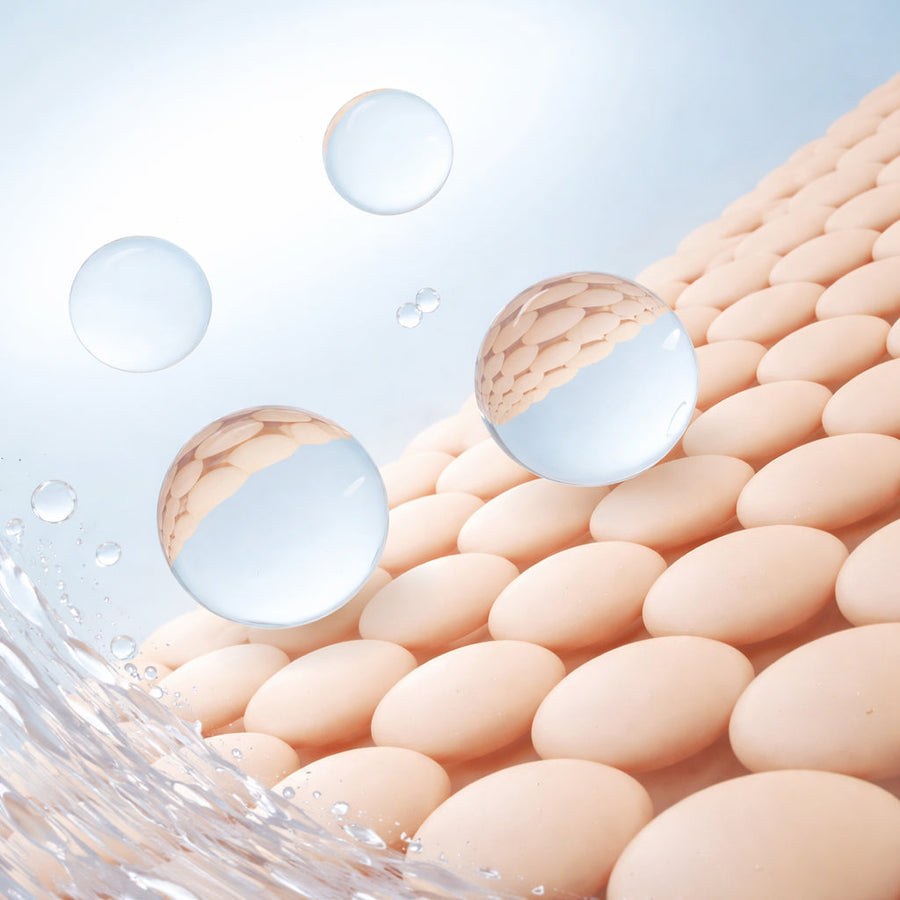
The outermost layer of skin is a wall of flattened cells, and how it looks and feels tracks its water content closely. Well watered, it is flexible and light-reflecting. Short of water, it tightens, creases finely, and goes flat and grey; that look has its own explainer in why skin looks dull.
Ingredients that raise water content are humectants: glycerin, sodium hyaluronate, panthenol, urea. They hold water molecules to themselves, and applied in a serum or lotion they bind water into that outer wall. Skin also makes its own humectants, a mix called natural moisturising factor, which harsh washing and hot water deplete.
One honest caveat. Humectants hold water wherever conditions push it, and in very dry air a humectant layer with nothing over it can give its water up to the room. Hydration without sealing is a bucket without a lid.
A note on the most repeated advice in this area: drinking more water does not top up the outer layer. Surface hydration is governed by the barrier and the air around it, not by the last glass; unless you are dehydrated in the medical sense, the extra glass leaves through the kidneys, not the cheeks. The water that matters here is applied and sealed, not sipped.
Moisturization is the lid and the mortar
Moisturization is the other half: slowing the exit of water and resupplying lipids. Occlusive ingredients (butters, oils, waxes) form a film that slows evaporation. Emollients soften and fill the gaps between surface cells. Ceramides and fatty acids restock the mortar that holds the wall together, and that mortar is most of what "skin barrier" means; the fuller story is in the skin barrier repair guide.
A product sold as a moisturizer usually does several of these jobs at once, and the better ones carry humectants too, which is why the two words blur so easily on packaging.
The two deficits feel different
Skin short of water feels tight, especially after washing, looks dull, and shows fine temporary creasing; makeup sits badly on it. It can happen to oily skin too, which is its own confusing case, covered in oily but dehydrated.
Skin short of lipids flakes, roughens, itches, and stings when products go on. This is the winter-and-hard-water state, and it lingers rather than fluctuating through the day. It is the deficit that reads as "sensitive" and behaves like it.
The two travel together often enough that the distinction can seem academic. It is not, because the fixes differ, and because a routine aimed at the wrong deficit fails in a specific way: humectants alone on lipid-poor skin evaporate away, and a heavy occlusive on dehydrated skin seals in a shortage.
Water first, then the seal
The order follows from the mechanics. Add water with a humectant layer, then close the lid with a moisturizer that carries lipids. Two steps if you like layers; one step if you do not, because plenty of products, creams especially, carry humectants and lipids in the same formula, and for most skin a single well-built product is genuinely enough. The two-step version earns its place when one product is not coping: deep winter, forced-air heating, skin that drinks a cream and asks for more.
Evenings are the slightly better slot for the full two steps, since skin loses more water overnight than during the day, but the order matters more than the hour.
The signs you have it right are unglamorous. Skin does not feel tight after washing, nothing flakes, and products that used to sting stop stinging.
What neither one does
Adding and sealing water changes how skin feels and how light sits on it. It does not change oil output, pigment, or acne, and the plumped look hydration gives fine lines is temporary water optics, not a change in the skin's structure. An honest product says that quietly; an overreaching one says otherwise in serif type. And dryness with cracking, bleeding or persistent itch is past the cosmetic line: eczema and its relatives are medical, prescription emollients exist, and a clinician beats a bigger jar.
Which format carries which half, and whether one product is enough for your skin, is what the format finder works out in three questions.
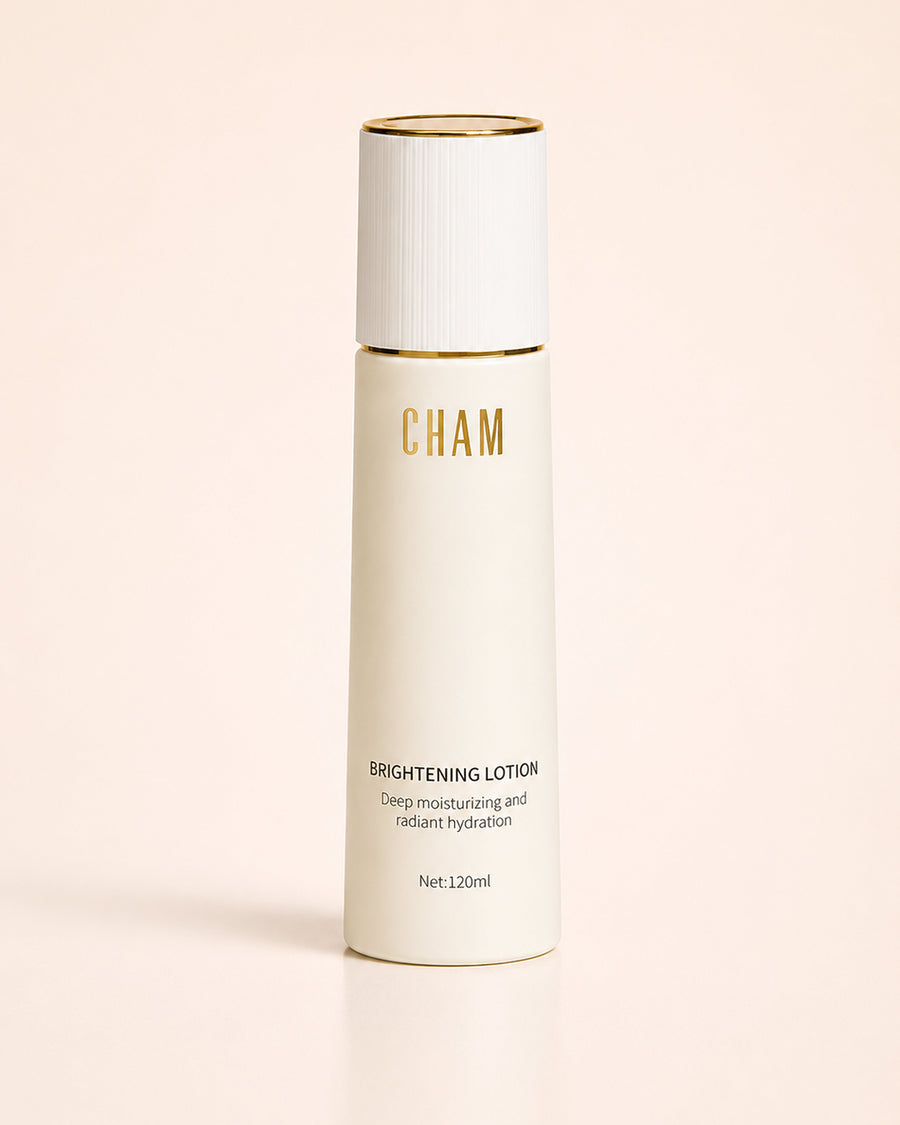
Where this sits in the Cham range
The Brightening Face Cream is a single-product version of the order above: glycerin and sodium hyaluronate for the water, Ceramide NP and wheat germ oil for the lid and the mortar, niacinamide and centella asiatica alongside, in a texture light enough for daily use. The serum in the range is the two-step option's first half, humectants with no real seal, which is exactly what a first half should be. Either way the sequence stays the same and short: if skin is tight, add water; if it flakes, add lipid; when in doubt, do both, water first.