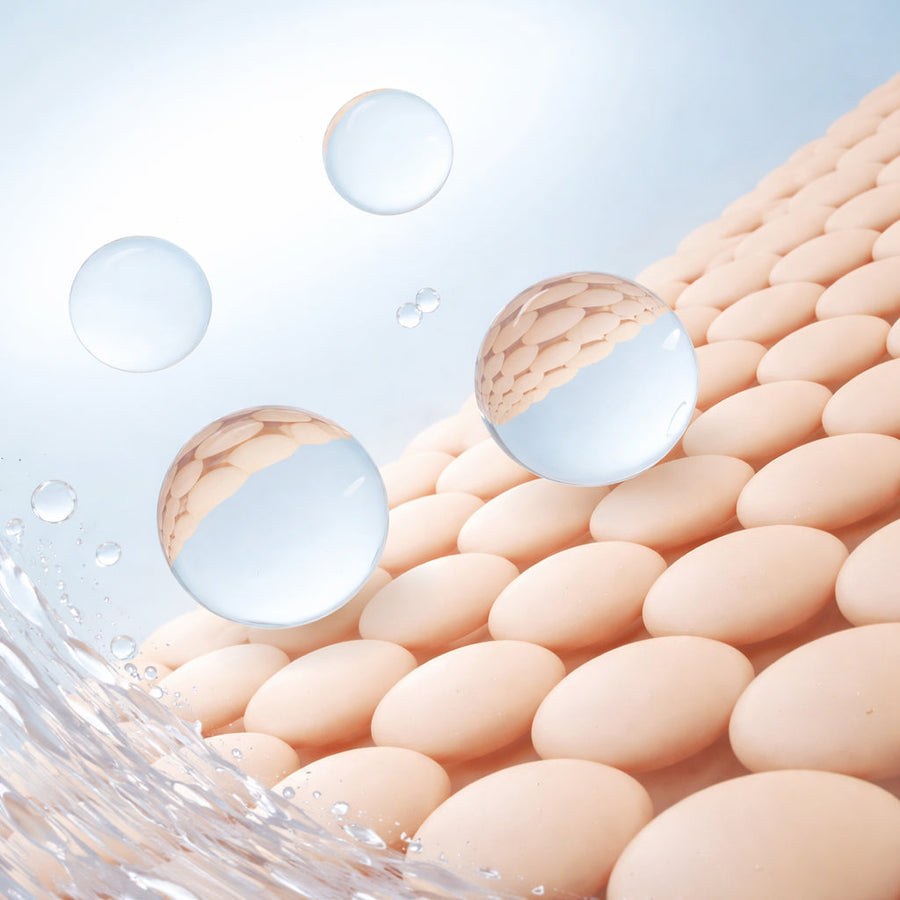
The phrase open pores has done a lot of damage, because it describes something that does not happen. A pore is the opening of a hair follicle. It has no muscle around it and no mechanism for opening or closing, and nothing applied to the skin makes it contract.
What varies is how visible the opening is, and that is a genuine, changeable thing. It just changes for reasons that have almost nothing to do with the products sold for it.
What makes a pore look larger
Oil output. A follicle producing a lot of sebum has a wider opening, because the channel is carrying more through it. This is the single biggest factor, it is why pores are most visible on the nose, forehead and inner cheeks, and it is largely hormonal.
What is sitting in it. A pore holding oxidised sebum and dead cells reads as a dark dot and looks wider than it is. Clear the contents and the same pore looks smaller without having changed size.
Loss of support around it. Collagen and elastin hold the skin around the opening taut. As that support declines with age and, far more quickly, with cumulative ultraviolet exposure, the opening slackens and appears stretched, usually vertically. This is why sun damage shows up as pore texture long before it shows up as lines.
Genetics. Follicle size varies from person to person, and thicker sebaceous skin comes with visibly larger pores. Nothing changes this, and it is worth knowing before spending anything.
Light. Pores are visible because they cast small shadows. Overhead light, magnifying mirrors and a phone camera at close range all exaggerate them dramatically. The face has not changed between the bathroom mirror and the lift.
What actually helps
Sun protection. It is the least exciting answer and the one with the most support behind it. The slackening around the opening is largely photoageing, and preventing more of it does more over years than anything else on this list.
Keeping the follicle clear. Salicylic acid gets into the follicle because it is oil soluble, which is why it suits this specifically. Salicylic acid and niacinamide together covers pairing it sensibly. Regular, gentle cleansing does a share of the same work without any active at all.
Retinoids. These improve the support structure around the opening over months, and they have the strongest evidence of any topical for pore appearance. They are also the most likely to irritate, and irritation makes texture look worse before it looks better.
Niacinamide. It moderates oil output modestly and improves surface quality. The effect on pore appearance is real and small, and honest coverage of it says small.
Not making it worse. Squeezing stretches the opening and leaves it visibly wider afterwards. Aggressive scrubbing does the same by irritating the surrounding skin. Heavy occlusive products on skin already producing plenty of oil add congestion, which is where what non-comedogenic means is worth a read.
What does not work
Cold water, ice and toners marketed as pore-tightening produce a brief swelling of the surrounding skin that flattens the opening's appearance for a few minutes. Rubbing ice on your face covers the mechanism and its limits. Egg white masks do the same thing through drying and tightening a film across the skin, and the effect leaves with the film.
Pore strips remove the top of a plug and leave the rest, which refills. Steaming softens the contents and does not change the opening. None of these is harmful in moderation, and none of them is doing what the packaging implies.
Whether a serum can do it is a question asked often enough to deserve its own answer, and can a serum shrink pores gives it directly.
The realistic goal
Pores that are visible in a magnifying mirror at close range will stay visible in a magnifying mirror at close range. What is achievable is a face where the openings are not filled, not inflamed, not surrounded by slackened skin, and not lit from directly above. In normal light that reads as smooth skin, which is what people actually want when they say they want smaller pores.
Skin with visible pores is also, usually, skin that ages more slowly, since sebum is doing some of the work a moisturiser would otherwise have to. That is a genuine consolation rather than a rhetorical one.
There is no pore product in the Cham range and no retinoid. The serum and cream both carry niacinamide, which belongs to the small-effect half of this list, and the honest framing is that sun protection and not squeezing will do more than anything in the range.