Non-comedogenic reads like a certification, and that is the first thing to correct: no regulator anywhere defines the term, audits its use, or maintains a standard test a product must pass before printing it. The word is a claim by the manufacturer, meaning roughly "formulated with the intention of not blocking pores, and we have some basis for saying so". That does not make it empty. It makes it a statement whose value depends entirely on the diligence behind it, which is worth understanding before letting it steer a purchase.
Where the idea comes from
A comedo is a blocked pore, the seed form of most acne: blackheads and the tiny closed bumps that surface when oil and dead cells pack a follicle. Comedogenicity is an ingredient's tendency to encourage those blockages.
The classical measurements were run decades ago on rabbit ears, a system chosen because it forms comedones quickly. Substances were applied and scored by how enthusiastically the follicles clogged. The rabbit ear model is more sensitive than human facial skin, which is useful for screening and terrible for prediction: plenty of ingredients that alarm a rabbit ear behave uneventfully on a human face. Later human protocols improved on this, applying candidates under occlusion to the upper back and counting what forms. Better, but slow and expensive, and mostly applied to single ingredients rather than finished products.
Why the ingredient blacklists mislead
Those old scores escaped the lab and became the comedogenicity charts that circulate everywhere, where each ingredient carries a number and shoppers are taught to reject any product containing a high scorer. The charts fail in a specific, mechanical way: comedogenicity is a property of a concentration inside a formula, not of a name on a list.
An oil that clogs at full strength may be present at a fraction of a percentage point, emulsified, and rinse off entirely. Two low-scoring ingredients can combine into a film that behaves worse than either alone. A "zero-rated" formula can still sit heavily on one particular person's skin. Judging a finished product by scanning its ingredient list against a chart is astrology with an INCI vocabulary: the inputs are real, the method is not.
The formula-level question, does this actual product clog these actual pores, can only be answered at the formula level, either by human testing or by the accumulated experience of people wearing it.
How to use the label anyway
Used as a filter rather than a promise, the label earns its keep. A brand printing non-comedogenic is at minimum telling you what the formula was designed to do, and inviting the market to hold it to that. Products aimed at oily and blemish-prone skin take the claim more seriously than the average, because their audience punishes failures fastest.
The second half of the method is personal and unglamorous: introduce one product at a time and let a few weeks of wear be the real test, since pore blockages build slowly rather than announcing themselves the next morning. New congestion that tracks a new product is an answer regardless of what the label promised. The sorting of that situation, and of the breakouts that are coincidence rather than consequence, is the subject of purging vs reaction. Texture is a rough prior worth keeping: the heavier and more occlusive a product feels, the more the claim is doing, which is why the question comes up so often around sunscreens in particular, covered in does sunscreen cause breakouts.
Where Cham stands on it
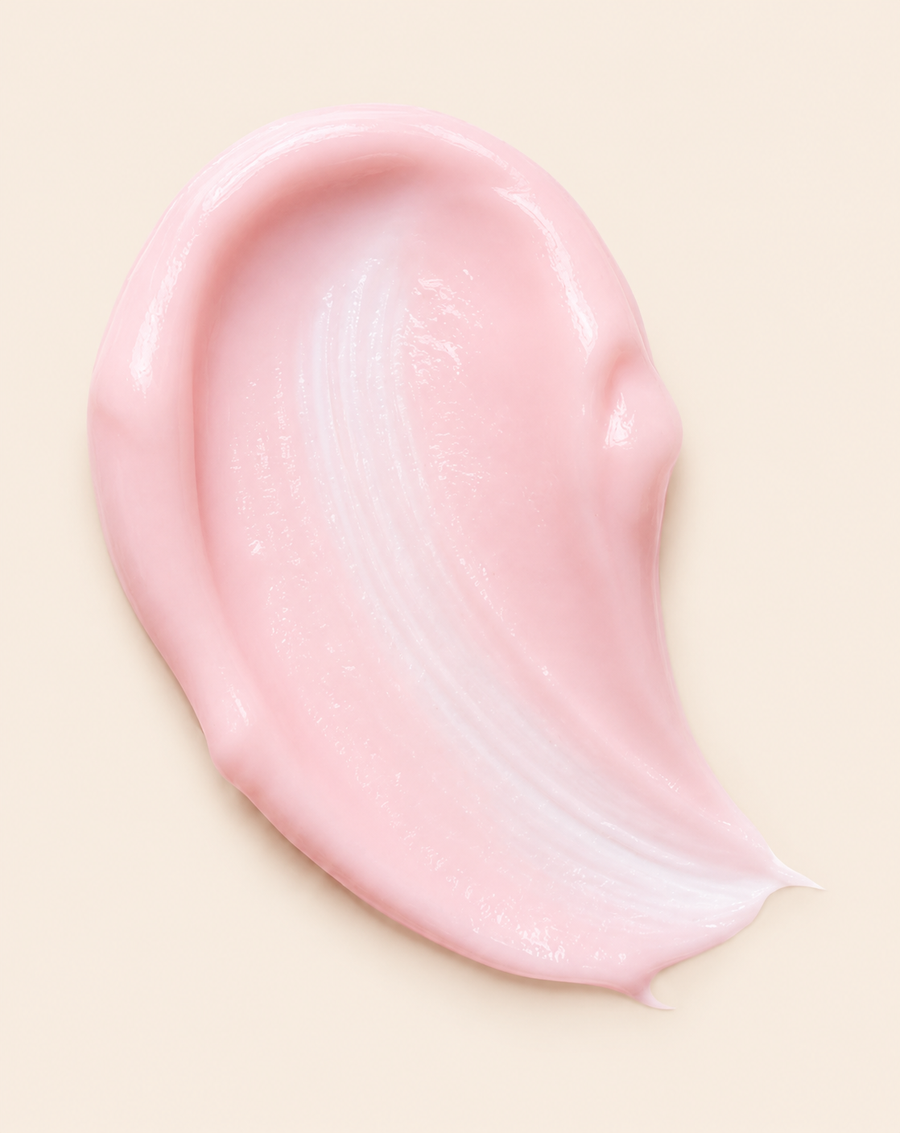
Every product in the Cham range carries the non-comedogenic claim, and this post is the honest print behind that sticker: it means the formulas were built light, lean on humectants rather than heavy occlusives, and avoid the ingredients and loadings with a record of causing congestion. The texture philosophy is visible in the products themselves; the serum is a watery gel, and even the body lotion is built as a light milk rather than a butter.
What the claim cannot mean, from Cham or anyone, is a guarantee for every face. Skin varies too much for that sentence to be available honestly. If something in the range disagrees with your skin, that observation outranks the label, and the sensible move is the one described above: stop, let things settle, and judge products one at a time.