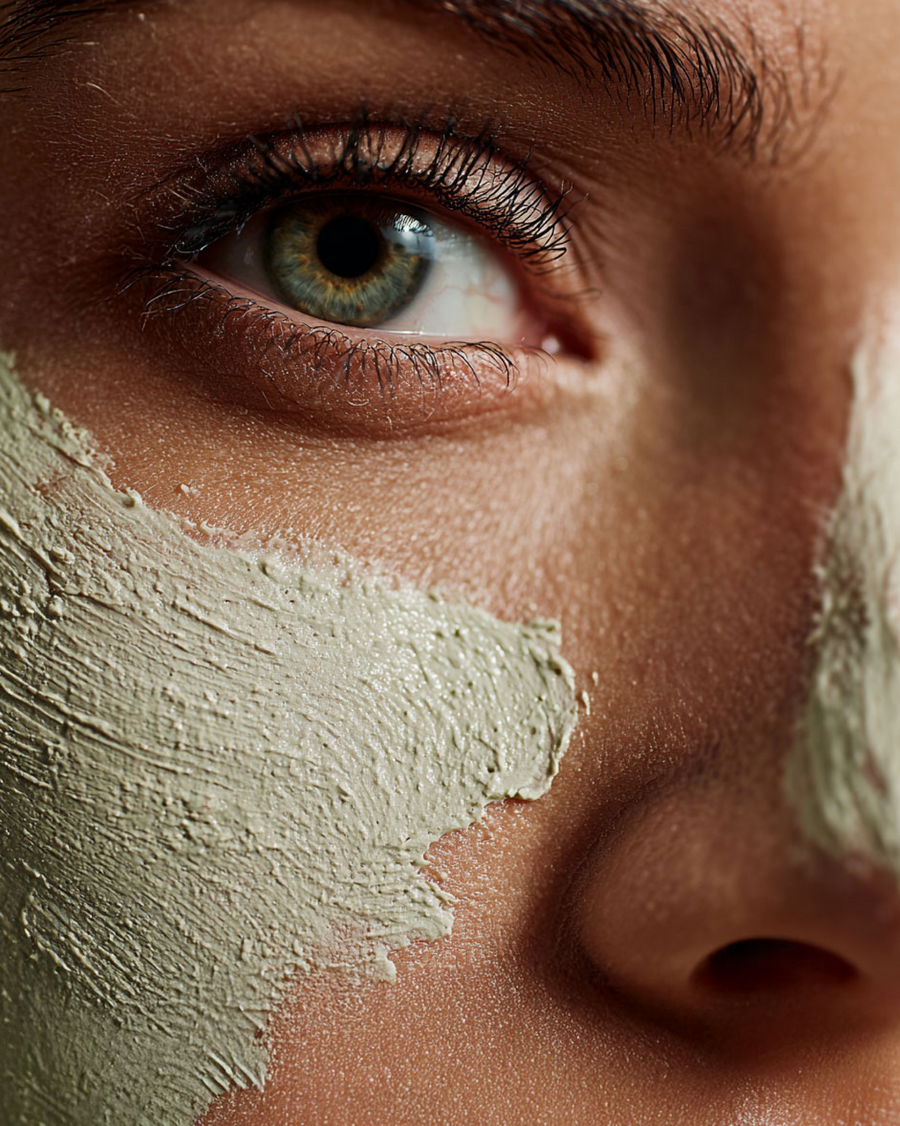
De-tan is one of the most searched skincare words in India and it has no fixed definition. No regulation says what a de-tan product must contain or do. The word describes a promise, and what sits behind it differs from one tub to the next.
Reading a few ingredient lists shows the same handful of approaches. Knowing them makes it easier to judge any pack, cream or salon facial sold under the name.
What is inside a de-tan product
Mild acids. Lactic, glycolic and citric acid are common. They loosen the bonds between dead surface cells so the top layer comes away more easily.
Fruit enzymes. Papain from papaya and bromelain from pineapple break down the same surface cells by a different route.
Clays. Kaolin, bentonite and multani mitti absorb oil and tighten as they dry.
Tone-evening ingredients. Kojic acid, licorice extract, niacinamide and vitamin C derivatives appear in many formulas. In a pack that is washed off after fifteen minutes they have very little time to act.
Bleaching agents. Some salon de-tan systems come as a cream and a powder that are mixed before use. Where the powder is an oxidising activator, the product is working like a bleach, and the result includes lightened facial hair.
Most de-tan packs are exfoliating clay masks. A smaller number are bleaches with a gentler name.
De-tan and bleach are different things
Bleach uses an oxidising agent, usually hydrogen peroxide with an activator, to strip the colour from facial hair. Paler hair makes the whole face look lighter. It does not change the skin's pigment, and it is harsh on the surface. What facial bleach does covers it in detail.
A de-tan pack without oxidisers works by removing dead cells and oil. It is milder, and it leaves hair as it was.
If a product has to be mixed from two parts just before use, or the instructions mention a tingling "activation", read the ingredients for peroxide. That tells you which kind it is.
Does de-tan work?
It does what exfoliation does. The dull outer layer gets thinner, the skin reflects light more evenly, and the face looks clearer for a few days. People describe that as the tan lifting.
The tan itself is pigment held in living cells below the layer a pack can reach. It leaves as those cells rise and shed over several weeks. Regular gentle exfoliation may shorten that slightly, and only if the skin is protected from fresh sun in the meantime. How to fade a tan explains the timing.
So a de-tan pack is a reasonable way to freshen the surface. It does not remove a tan in one sitting, whatever the box says. Whether a tan can be removed in a day goes through what changes and what does not.
Is de-tan good for skin?
Used occasionally on skin that tolerates acids, it is fine. The problems come from frequency and timing.
Over-exfoliation is the main one. A weekly pack on top of an exfoliating face wash and an acid toner is three exfoliants, and the barrier gives way. Over-exfoliated skin lists the signs: tightness, stinging from products that used to be comfortable, and a shiny, thin look.
Freshly exfoliated skin also burns and tans faster. A de-tan facial followed by an afternoon outdoors without sunscreen leaves skin darker than before the appointment.
Side effects to watch for
Mild tingling for a minute is common with acids. Burning is not normal, and neither is redness that lasts into the next day or skin that peels.
If a pack burns, rinse it off with cool water straight away. Do not wait out the time on the label. Follow with a plain moisturiser and nothing else for a few days.
Darker patches that appear a week or two after a harsh session are pigment left by the irritation. They fade, slowly, and they are the reason a gentler product used less often gives a better result over a season.
Who should skip it
Skip de-tan products on sunburnt skin, on active acne that is sore or broken, and on eczema or any rash.
Skip them while using a retinoid or a strong exfoliant unless a dermatologist has said otherwise. The skin is already being pushed.
In pregnancy, check the ingredient list with your doctor first.
And skip any new de-tan product the day before an event. A reaction takes longer to settle than the time available.
How to use one sensibly
Patch test on the jawline a day ahead. Use it no more often than the label says, and less if the skin feels tight. Apply to clean dry skin, keep it away from the eyes and the corners of the nose, and take it off on time. Moisturise afterwards and wear sunscreen the next morning.
For a salon facial, ask what is in the product and whether it contains bleach. Book it several days before any occasion.
Cham does not make a de-tan pack. The Brightening Face Mask is a different kind of product: a weekly sheet mask with two forms of vitamin C, alpha arbutin and niacinamide, left on for fifteen to twenty minutes and not rinsed. It hydrates on the day and works on uneven tone over weeks of regular use.