Pro-Xylane, and what the research actually shows
Pro-Xylane is L'Oréal's registered name for hydroxypropyl tetrahydropyrantriol, a molecule made from xylose, a sugar taken from beech wood. It is in Cham's face wash, so this page sets out what the research on it shows, who ran that research, and what it does not show.
What it is
Hydroxypropyl tetrahydropyrantriol is a C-xyloside: a xylose sugar with a short carbon chain attached. It is made in a laboratory rather than extracted, by converting xylose from beech wood and then reducing the result. Calling it natural would be wrong. Calling it plant derived is fair.
L'Oréal developed it, describes it as the first of its kind made on green chemistry principles, and put it on the market in September 2006. Regulatory filings also list it under a second L'Oréal trade name, Mexoryl SBF. Its original US patent has expired, and other ingredient suppliers now make and sell the molecule under its INCI name.
One detail matters when comparing sources. The molecule comes in two mirror-image forms, and laboratory work suggests one of them is more active. Material from different suppliers can differ in purity and in the mix of the two.
What the research shows
Most of the work is laboratory work. In human skin kept alive in the lab, in reconstructed skin and in cultured cells, it increased the production of glycosaminoglycans and proteoglycans, the water-holding molecules of the deeper skin, and of the proteins at the junction between the skin's two main layers.
The human studies are few and small. One put a ten per cent cream on the forearms of five postmenopausal women for three months and examined skin samples. Larger trials, the biggest with 240 women over two months, tested serums or creams that combined it with other actives, and measured wrinkles, firmness, hydration and how the skin looked. Some had no untreated comparison group.
Nearly all of this research was run, funded or co-authored by L'Oréal or one of its brands. That does not make it wrong. Independent reviewers point out the conflict of interest, though, and it is why this page calls the evidence promising rather than settled.
What it does not show
It is not a brightening ingredient. No study isolates any effect on pigment, melanin or dark spots. L'Oréal's own review of pigmentation treatments lists it with ingredients that improve skin structure, not with the ones that lighten. Cham sells brightening products, which is exactly why this needs saying plainly.
There is no study of it in a face wash. Every human study used a leave-on product. A cleanser is on the skin for under a minute and is rinsed away, and Australia's regulator, assessing its safety, assumed about a hundredth as much stays on skin from a rinse-off product as from a cream. We do not claim the leave-on results for our face wash.
Some popular claims have no source. Specific percentages for improved skin quality, a collagen boost proven in people, or results from the ingredient on its own all circulate widely, and none traces to a published study we could find.
Who should be careful
The EU's cosmetic ingredient database lists its function as skin conditioning, with no restrictions. Australia's industrial chemicals regulator assessed it in 2014 and did not consider it an unreasonable risk to public health; its animal tests found it slightly irritating and found no sign of sensitisation. The American Cosmetic Ingredient Review panel has not assessed it.
One published case of contact dermatitis was traced to it, in an anti-ageing cream. One case is not many, but reactions are possible with any ingredient, so a patch test on the inner arm is worth the few days it takes.
There is no published research on its use in pregnancy. If you are pregnant or breastfeeding, ask your doctor before starting any new product.
Where you will find it
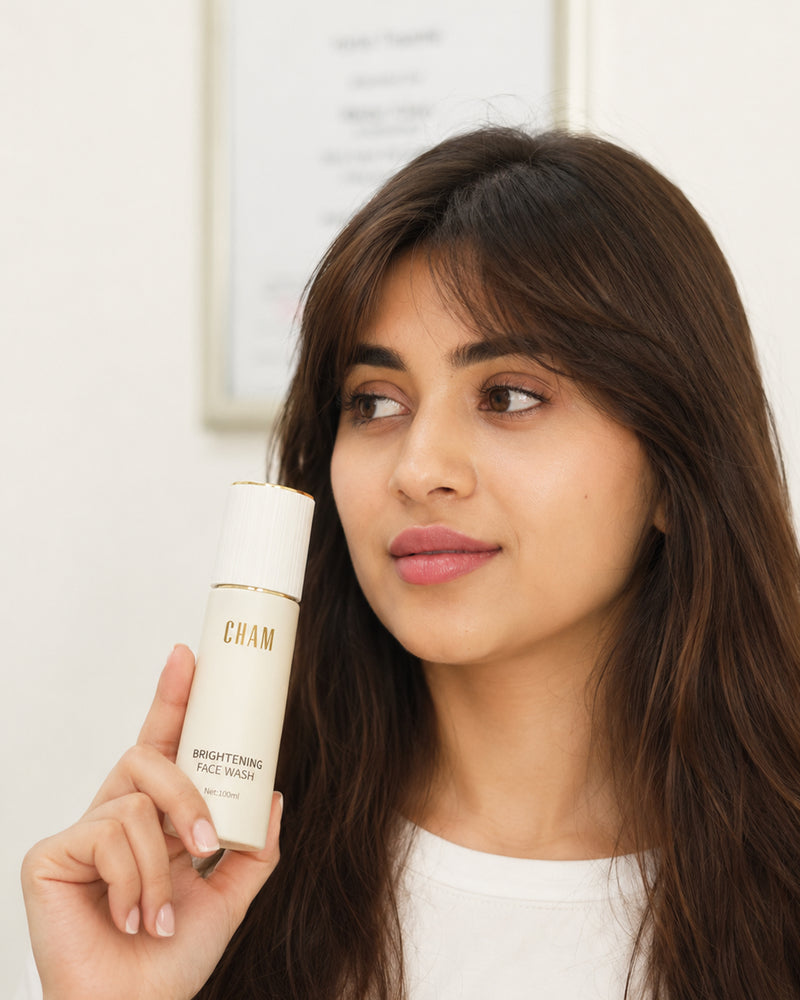
The Brightening Face Wash lists it by its INCI name, alongside niacinamide and rose flower water, in a low-foam base made for twice-daily use.
It is a rinse-off product, so the leave-on results above are not claims we make for it. What the wash is for is cleansing without leaving skin tight. Pro-Xylane is a registered trademark of L'Oréal, and Cham is not affiliated with L'Oréal.

Where this comes from
The molecule. Its development and 2006 launch, by L'Oréal chemists; an independent production route from beech xylose, with the activity of the two forms; L'Oréal on green chemistry; the Pro-Xylane trademark record.
Laboratory studies. Human skin kept alive in the lab; reconstructed skin; cultured skin cells. All are L'Oréal studies.
Human studies. Five postmenopausal women, ten per cent cream; 240 women, combined serum, funded by Vichy; 59 women, combined serum; 49 women, cream, no comparison group.
Pigmentation and safety. L'Oréal's 2026 review of pigmentation treatments; the EU CosIng entry; the Australian regulator's 2014 assessment; the published contact dermatitis case.
Asked often
What does Pro-Xylane do?
In laboratory models it increases the production of glycosaminoglycans and proteoglycans, the molecules that hold water in the deeper skin, and of proteins at the junction between the skin's layers. Human studies of leave-on products containing it measured wrinkles, firmness and hydration. Almost all of that research is L'Oréal's own.
Is Pro-Xylane the same as hydroxypropyl tetrahydropyrantriol?
Pro-Xylane is L'Oréal's registered trade name. Hydroxypropyl tetrahydropyrantriol is the ingredient name that appears on labels, including other brands' labels, now that other suppliers make the molecule. Purity and the mix of its two mirror-image forms can differ between suppliers.
Is Pro-Xylane effective?
The laboratory results are consistent, and the human studies point the same way, but they are small, mostly combine it with other actives, and are nearly all run or funded by L'Oréal. Promising rather than settled is the fair summary.
Is Pro-Xylane better than retinol?
They are not substitutes. Retinoids work by speeding up how quickly skin renews and have a long, broad research record. The human research on Pro-Xylane is small and almost all connected to L'Oréal. Nothing in it shows one replacing the other.
Does Pro-Xylane brighten skin?
No study shows it. The research covers skin structure, wrinkles, firmness and hydration, and L'Oréal's own review groups it with ingredients that improve structure rather than those that lighten.
Is Pro-Xylane safe?
The EU lists it as a skin conditioning ingredient with no restrictions, and Australia's regulator did not consider it an unreasonable risk. One case of contact dermatitis has been published. Patch test any new product, and ask your doctor first in pregnancy, since there is no research on it there.