Knuckles sit slightly darker than the skin around them in most people, and in deeper skin tones the difference is more visible. That baseline is normal and permanent, in the same way that elbows and knees are darker than the limbs they belong to.
What is worth paying attention to is change: knuckles that have become noticeably darker over a year or two, or darkening that appears alongside the same thing happening at the neck, the underarms or the elbows.
Why knuckles are darker to begin with
The skin over a joint is under constant mechanical stress. It bends, stretches and rubs hundreds of times a day, and skin under repeated friction thickens and produces more pigment. The same mechanism explains dark knees and elbows and most of dark underarms.
This is not damage. It is the skin doing what it is supposed to do at a point of wear.
Causes worth separating
Friction and pressure. Manual work, gym work, resting hands on hard surfaces, and habits like knuckle cracking or pressing. This is the most common cause and the slowest to shift, because the friction rarely stops.
Post-inflammatory pigmentation. Eczema on the hands, frequent hand washing, harsh detergents and dish soap all leave behind low-grade inflammation, and in deeper skin tones inflammation leaves pigment. Hands are washed more often than any other skin on the body, and it shows.
Vitamin B12 deficiency. This one is specific enough to be worth knowing. B12 deficiency produces a characteristic darkening over the knuckles and finger joints, often symmetrical, often with darkened creases on the palms, and it is common in India, particularly among people eating little or no animal food. It usually comes with tiredness, and sometimes with tingling in the hands and feet or a sore tongue. It is confirmed with a blood test and corrected with supplementation under medical supervision, after which the pigmentation settles over months on its own.
No cream addresses this, and a cream applied to it is a year spent on the wrong problem. Does diet affect pigmentation covers the small number of nutritional routes that are real, and B12 is the clearest of them.
Acanthosis nigricans. Velvety, slightly thickened darkening over the knuckles can be part of the same pattern that appears at the neck and in the folds, associated with insulin resistance, polycystic ovary syndrome and thyroid conditions. Dark neck causes goes into it properly. The distinguishing feature is texture: the skin feels different, not just darker.
Medication and medical conditions. Some drugs cause pigmentation over the joints, and some endocrine conditions do too. Both are rare and both belong with a doctor.
How to tell which one you have
Look at the pattern and the timeline.
Friction darkening is uneven, follows the areas that actually rub, and has been there for years without changing much.
B12 darkening tends to be symmetrical across both hands, appears over months rather than years, and often comes with the creases of the palms and the fingertips darkening too.
Acanthosis has texture and appears in more than one place at once.
If the darkening appeared over the last year, is on both hands equally, or is accompanied by fatigue, tingling or changes elsewhere on the body, a blood test costs less than most of the creams being considered and answers the question properly.
What to avoid
Skin lightening creams aimed at hands and knuckles sit in the same risk category as underarm lightening products, and the same warning applies: fast results point to a steroid or an unlabelled agent rather than to a good formula. How to tell whether a cream contains a steroid covers the signs, and thinned skin over a joint is worse than pigmented skin over a joint.
Scrubbing and bleaching add friction and irritation to an area that already has too much of both.
What does help
Once a medical cause has been excluded or addressed, the approach is unremarkable: reduce friction where it can be reduced, moisturise regularly since dry thickened skin reads darker than it is, use gloves for detergent work, and apply sun protection to the backs of the hands, which take more ultraviolet than almost any other skin and get almost none of the attention.
Pigment already deposited fades slowly, over months, and only once whatever put it there has stopped.
The body pigmentation zone map covers how these causes distribute across the body, and it is the fastest way to see whether knuckles are an isolated finding or part of a pattern.
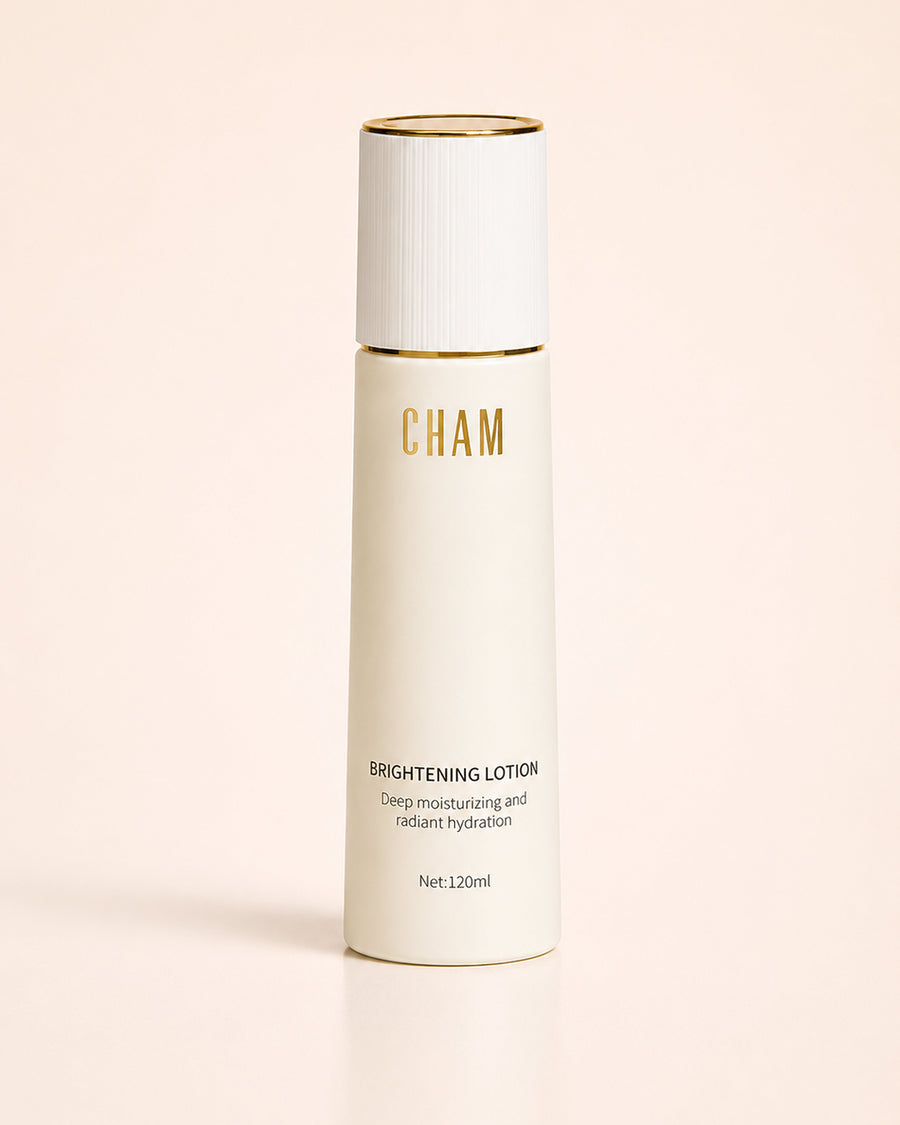
Nothing in the Cham range is a hand cream. The Brightening Body Lotion carries niacinamide and can be used on the backs of the hands, which is an honest use rather than a solution, and it belongs after the cause has been sorted out rather than instead of sorting it out.