Glass skin is a Korean beauty term for skin that looks so smooth and hydrated that it reflects light evenly, like glass. It describes an appearance rather than a state of health, and unpicking what produces that appearance is more useful than following a ten-step routine towards it.
Four things create it. Only two are skincare.
Even light reflection needs an even surface
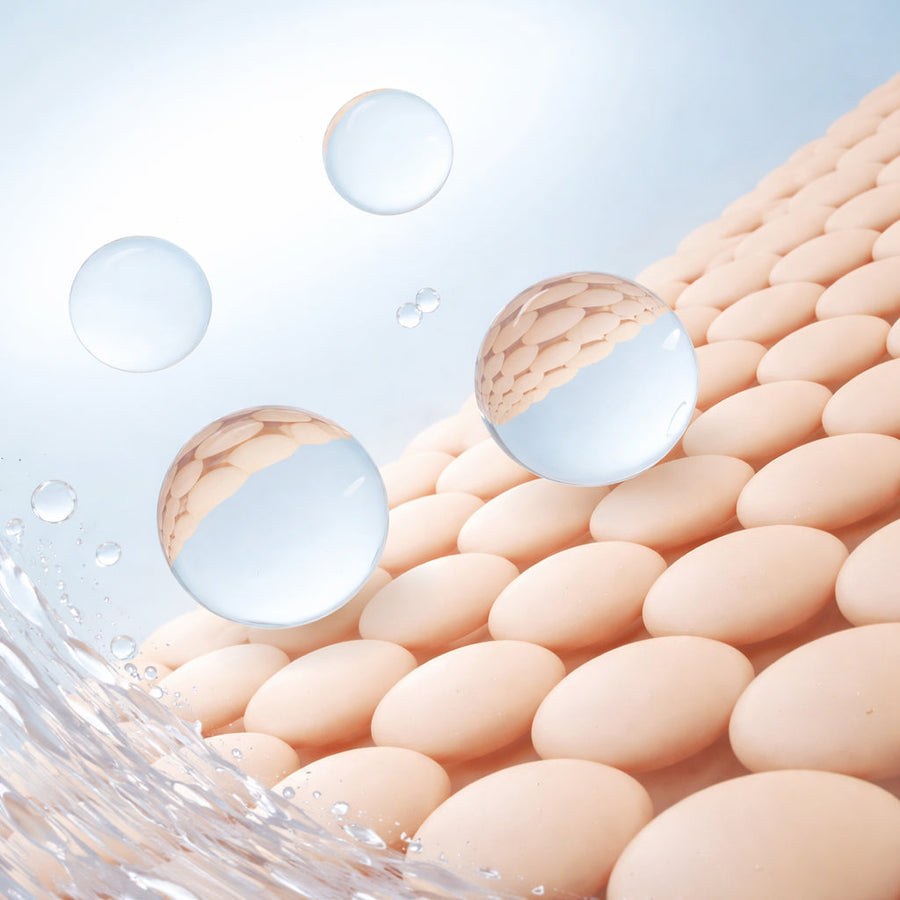
Skin looks matte when its surface scatters light in every direction, and it looks luminous when the surface is smooth enough to reflect it in roughly one. That is the whole optical basis of the look.
A smooth surface means well-hydrated skin with intact cell layers, no flaking, no rough patches, and minimal texture. That is achievable, and it is the part skincare genuinely delivers. Why skin looks dull covers the same mechanism from the other end.
Hydration is doing most of the work here. Well-hydrated corneocytes sit flat and swollen rather than curled and dry, and the difference in how they handle light is immediate. This is why a good moisturiser produces a visible change within days while a pigmentation active takes months. Hydration against moisturisation covers which product does which half.
Even tone helps and takes longer
Patchiness breaks up the reflection and reads as unevenness even when the surface is smooth. This is the slow half, and it is the pigmentation half: sun protection, months of a tone-evening active, and no irritation in the meantime. What causes uneven skin tone is the relevant read, and what skin brightening means is the honest boundary.
The two parts that are not skincare
Pore and texture genetics. Skin with naturally fine pores reflects light in a way that skin with larger follicles cannot, and no routine changes that. Open pores covers what actually shifts and what does not. A large share of the faces used to illustrate glass skin have fine, low-sebum skin to begin with.
Makeup and lighting. This is the part left out of most explanations. The glass skin look in photographs typically involves a hydrating primer, a thin layer of a luminous base, sometimes a liquid highlighter blended across the high points, diffuse soft lighting, and a camera at a flattering distance. That is not a criticism of anyone, it is just what is in the frame.
A useful test: look at the same skin in overhead light, unfiltered, at arm's length. The difference between that and the reference photograph is the proportion of the effect that was never skincare.
What a sensible routine towards it looks like
The useful version is far shorter than ten steps. A cleanser that does not strip, since tight skin is not smooth skin. A hydrating layer applied to damp skin, which is where humectants work. A moisturiser to hold it. Sun protection every day, because pigmentation and texture both worsen without it. And one tone-evening active given months rather than weeks.
The elaborate layering associated with the term is optional, and past a point it becomes counterproductive: more products means more chances of irritation, and irritated skin is neither smooth nor even. What order to apply skincare covers the sequence for whatever number of steps you settle on.
The part worth saying plainly
Skin with visible texture, visible pores and some unevenness is normal skin. The glass skin look is a specific combination of skin type, hydration, lighting and cosmetics, and treating it as a baseline that healthy skin should reach is how people end up over-exfoliating towards it. Over-exfoliated skin is the usual destination of that route, and it produces the opposite of the goal: a tight shine that is barrier damage rather than hydration.
If the appeal is a smooth, well-hydrated, even-looking face, that is reachable for most people. If the appeal is the photograph, some of it was never available.
The part of this with the fastest effect, the base and the highlighter, is outside the Cham range entirely. The Brightening Face Cream carries niacinamide and Ceramide NP and belongs to the hydration half, which is the half that shows up soonest and matters most for how skin handles light.