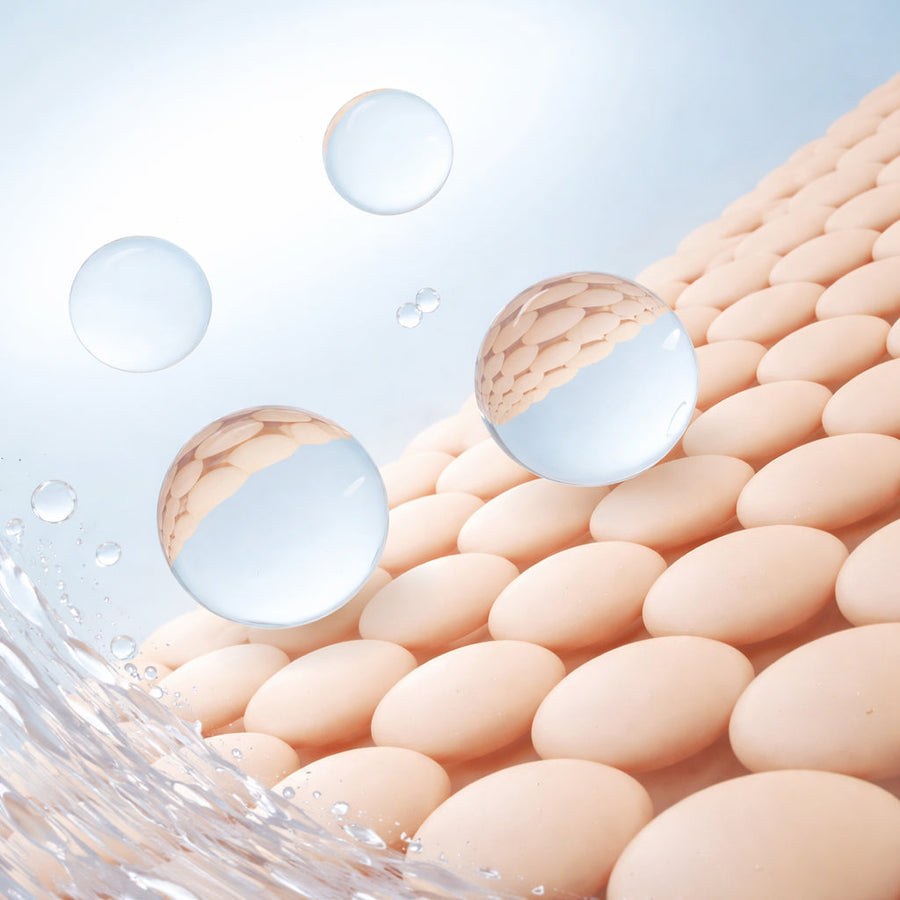
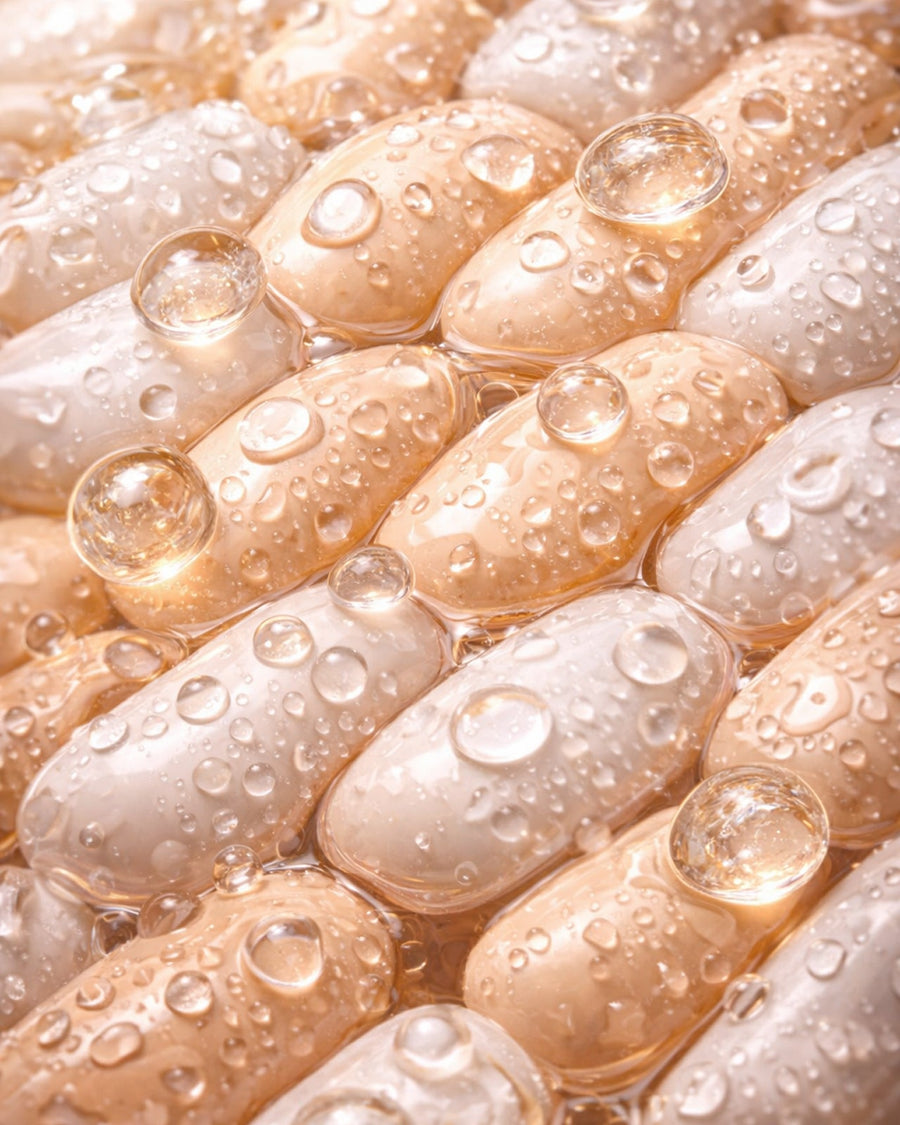
Hyaluronic acid has a reputation larger than its job. It is a humectant, a molecule that holds water. Skin already makes its own, most of it in the deeper layer where it keeps the tissue cushioned. A serum does not top up that deep supply. It holds water in the outermost layers for as long as the product is there, which is useful and much less dramatic than the advertising.
What is on the label
Most products list sodium hyaluronate, not hyaluronic acid. It is the salt form of the same molecule and more stable in a formula. For practical purposes the two names mean the same ingredient.
Labels also talk about molecular weight. Large molecules stay on the surface and form a light film that slows water loss. Smaller ones get slightly further into the upper layers. Neither reaches the deeper skin in any amount that matters, and neither behaves like an injected filler, which is a different product placed by a needle.
The line about holding a thousand times its own weight in water describes the raw material in a laboratory. A few drops spread across a face are working with far less water than that, which is why application matters so much.
What it does on skin
Dehydrated skin shows fine, shallow lines, feels tight after washing and takes makeup badly. A humectant layer eases all three within minutes. The effect is temporary and stops when the product stops.
It does nothing for pigment, pores or oil. It also adds no oil of its own, which is why it suits oily skin that is short of water better than a heavier cream does.
How to use it
Apply it to damp skin, then put a moisturiser over it. Both halves matter.
A humectant takes water from wherever water is available. On damp skin in humid air, that is the surface and the air. In a dry room with nothing over it, some of that water comes from the skin underneath and then evaporates, and this is how a hydrating serum ends up leaving a face tighter than before. A cream on top closes the exit. Hydration and moisturization explains why the two steps are separate jobs.
Morning and night are both fine. It goes on after cleansing and before anything thicker, in line with the usual order of a routine.
What it pairs with
Everything. It has no pH requirement and reacts with nothing, so it sits under or over niacinamide, vitamin C, acids and retinoids without trouble. Vitamin C with hyaluronic acid covers the commonest pairing, and the ingredient pairing checker shows it as compatible with every other ingredient on the grid.
Side effects and limits
Reactions to hyaluronic acid itself are rare. When a hyaluronic acid serum stings or breaks someone out, the cause is usually something else in the bottle, a preservative or a fragrance, and a patch test will show that before the whole face does.
The complaint that is real is the tightness described above, and it comes from using the serum alone in dry weather.
It is also not the only humectant, or the best value. Glycerin does the same work, costs far less and has decades more evidence behind it. A formula with both is doing nothing unusual. A routine with neither will feel the lack in winter.
Where it sits in the Cham range
Sodium hyaluronate is on the ingredient list of four of the five Cham products: the Brightening Face and Body Serum, the Brightening Face Cream, the Brightening Body Lotion and the Brightening Face Mask. The face wash does not contain it.
In each of the four it works beside glycerin as a supporting humectant. Cham makes no standalone hyaluronic acid serum, and if you already use one you like, it layers under the cream without any change to the rest of the routine.